Finding the Lessons

I try to post well in advance of the upcoming Sunday.

You will want to scroll down to find the bible study for the lessons closest to the upcoming Sunday.

The blog will be labeled with proper, liturgical date, and calendar date.

You can open the monthly calendar to the left and find the readings in order.

You can also search below by entering the liturgical date, scripture, or proper. This will pull up all previous posts.

Enjoy.

Search This Blog by Proper and Year (ie: Proper 8B or Christmas C or Advent 1A)

Showing posts with label Philippians. Show all posts

Monday, September 21, 2026

Proper 23A, October 11, 2026

Proper 23A  ·  Year A
The Twentieth Sunday
after Pentecost
October 11, 2026
The Lessons Appointed
Old TestamentExodus 32:1–14
PsalmPsalm 106:1–6, 19–23
EpistlePhilippians 4:1–9
GospelMatthew 22:1–14
The Collect of the Day

Lord, we pray that your grace may always precede and follow us, that we may continually be given to good works; through Jesus Christ our Lord, who lives and reigns with you and the Holy Spirit, one God, now and for ever.

The Book of Common Prayer
A Prayer Before the Word
The Power of the Table

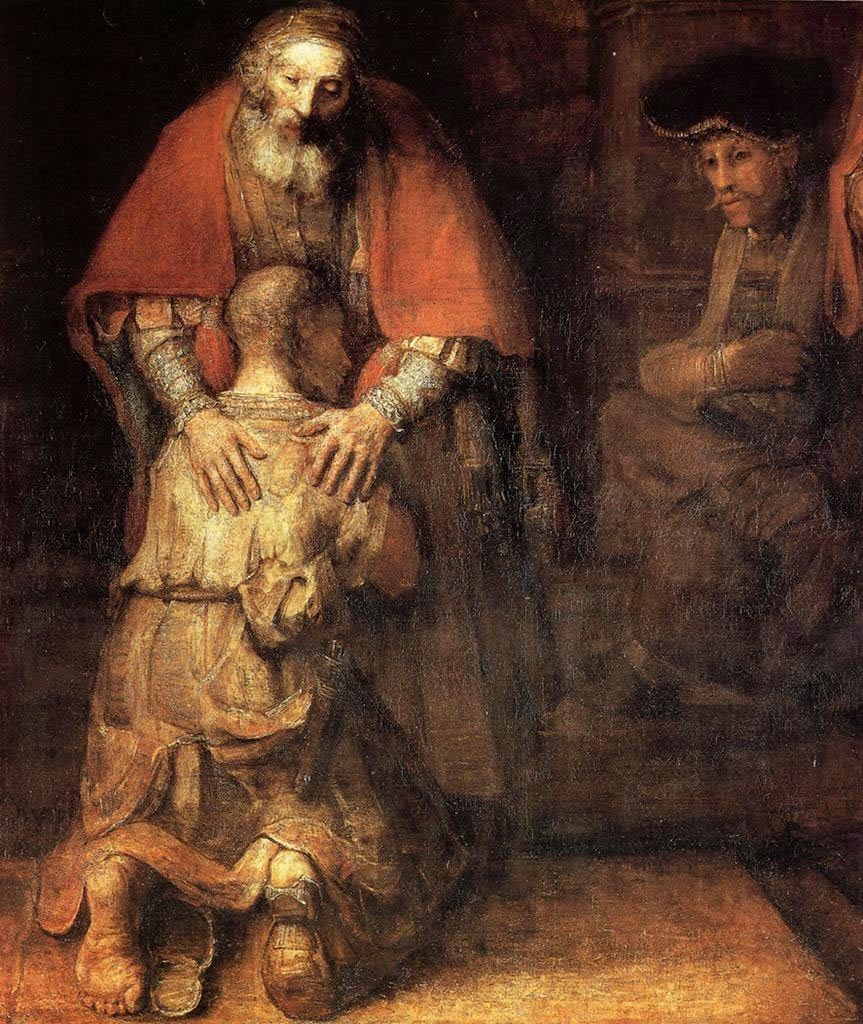
I arrive at the table before you, yet often struggle with feelings of unworthiness. My doubts join my failures and fears, where you keep extending your invitation. You divide the bread and fill the cup to declare it belongs to me. The nature of that love escapes my comprehension, though I yearn to learn. You chose to wash their feet, even performing this act for the one who would betray you. You shared that meal despite their future betrayal. You love us even when we fail. Allow me to join you at your table, because you say I belong there. Amen.

From A Bagman’s Prayer Book, C. Andrew Doyle
▶
Hear These Lessons Preached
Palmer Memorial Episcopal Church, Houston  ·  October 2017
The Gospel
Matthew 22:1–14
From the Tradition
The Fathers

“Then, in order that not even these should put confidence in their faith alone, He discourses unto them also concerning the judgment to be passed upon wicked actions … For the garment is life and practice.” And on how grace and diligence hold together: “And yet the calling was of grace; wherefore then does He take a strict account? Because although to be called and to be cleansed was of grace, yet, when called and clothed in clean garments, to continue keeping them so, this is of the diligence of them that are called. The being called was not of merit, but of grace. It was fit therefore to make a return for the grace.”

St. John Chrysostom, Homilies on the Gospel of St. Matthew, Homily LXIX
In the Liturgy

“Deliver us from the presumption of coming to this Table for solace only, and not for strength; for pardon only, and not for renewal. Let the grace of this Holy Communion make us one body, one spirit in Christ, that we may worthily serve the world in his name.” — The Prayer Book knows there is a way of sitting down at the feast that is still a refusal of it.

Eucharistic Prayer C, The Book of Common Prayer 1979, p. 372
Voices at the Table

“I am drawn to understand this double parable through the lens of James 2, and the tension between his affirmation that one’s faith can be seen in one’s “works” (by which he means deeds, especially deeds of justice and compassion), and Paul’s more famous affirmation (in Galatians and Romans) that our standing before God depends only on our acceptance of God’s grace.”

Sharon H. Ringe, Preaching This Week, WorkingPreacher.org, 2011

“The challenge of the story lies both in the warning about refusals and in the richness of the image of salvation as a feast … Beyond the strategy to save the party at the story level is the much richer notion of God’s generosity, not as an afterthought, but as God’s enthusiastic being and delight in all people, and pain at their refusal to share the life freely offered.”

William Loader, Murdoch University

This parable continues themes from the preceding lessons in the Matthean text. One of those themes is greatly defined by Jesus’ own mission in contrast to the authorities of his own day, and by the contrast between the growing Matthean community and the religious authorities some sixty or so years after Jesus’ resurrection. We can do a great deal of harm if we are not again careful with how we set up this parable. The danger for the preacher is that the divisions of the past can easily slip into hatred for others today. I would think that no good preacher wishes, intentionally or unintentionally, to create hatred for any ethnic or religious group. Moreover, when we focus on this one aspect of the text we completely miss what the text is saying to us today.

The second theme is the one that I think has the most traction from our pulpits today in our particular context. We are a church that is in the midst of a great and diverse global society. We are a church that sits ethnically divided and does not typically represent the community around us. It is easy to see this when we graph out the ethnic diversity of our church, or the age diversity of the church.

The second theme of the text is that the kingdom of God is passing from one generation to another. The kingdom of God was once something that meant belonging to a particular group; but now, through the ministry and mission of Jesus Christ and the work of the Holy Spirit, God’s fuller plan of inviting the whole world into fellowship and kinship is underway.

The parable tells us first and foremost that the kingdom of God is — and will be in the end — the fulfillment of a universal mission.

The cautions of the text are well put by the scholars Allison and Davies, who write in their third volume on Matthew:

The evangelist was all too aware that criticism of others as well as the doctrine of election are both fraught with moral peril; for the former tends to nourish complacency — censure of our enemies always makes us feel better about ourselves — while the latter can beget feelings of superiority … Thus it is that Christian readers of 22:1–14, who necessarily identify with those at the king’s banquet, cannot read the text and feel self-satisfaction over the wrath that overtakes others. They must, as the homilies on this text throughout the centuries prove, instead ask whether they are like the man improperly clothed, whether they are among “the many” despite profession to be among “the few.” God’s judgement comes upon all, including those within the ecclesia.

Allison and Davies, Matthew, III.208

In this light, and in light of the particular reflection of the kingdom of God we offer as a church, we might readdress the parable and ask ourselves the following questions. Are we going out on behalf of our householder? Are we going out and inviting all to come to the banquet feast? Are we accepting the invitation to sit at the table and to invite others? Are we willing to invite, and to sit at the table with, the good, the bad, and the ugly? Are we really interested in sitting in a filled banquet hall? Are we prepared for the feast? The question is not so much, are you wearing the right clothes, but: are you ready to invite, connect, and welcome the people God intends to gather around for the wedding feast?

This Sunday many a sermon will focus on the violence of this parable. Some will focus on the “us and them” reading. Some will speak out only to make the insider feel better. The truth-teller will challenge the community gathered to go out into the streets and gather in God’s people — the sacred people of God, created by God, a diversity of ethnicities and beliefs. Yes, the preacher this week who speaks the truth will be the preacher who challenges our church to a missionary imperative of sharing the Gospel.

No, we do not intend to preach a Gospel that does violence to others, but a Gospel of love that binds us together in the harmony of God’s community. We shall invite with our actions of care and hospitality. We shall gather God’s people in through actions which incarnate the Gospel of Jesus Christ.

I do believe in judgment; it happens every day. But I will tell you that I wish to be judged on the love and the kindness I show to my fellow human beings. I wish to be judged on the Gospel of love which invites all into God’s heavenly embrace. I wish to sit at the table with the good and the bad, the old and the young, people of every color and people of every language. After all… aren’t those always the very best dinner parties?

The Epistle
Philippians 4:1–9
From the Tradition
In the Liturgy

“The peace of God, which passeth all understanding, keep your hearts and minds in the knowledge and love of God, and of his Son Jesus Christ our Lord; and the blessing of God Almighty, the Father, the Son, and the Holy Ghost, be amongst you, and remain with you always.” — Paul’s line to two women who could not agree is the sentence the bishop or priest says over the congregation as it is sent out the door. It was written into a quarrel, and it is pronounced over one.

The Blessing, Holy Eucharist Rite One, The Book of Common Prayer 1979, p. 339
Voices at the Table

“Paul’s concern is unity in the church, which can only arise once we recognize our redemption as coworkers for the Lord, giving us a spirit of gentleness, and thereby turning our sight from earthly matters that lead to petty squabbles, derision, and anxiety. Only then can we experience the peace that transcends all understanding.”

Jacob Myers, Preaching This Week, WorkingPreacher.org, 2012

“But Paul sees a different reality alongside the violence and duplicity of Rome. The small and struggling Christian congregation in the Roman colony of Philippi is itself a kind of “colony,” a separate polis with a more powerful Lord who alone has defeated death.”

Susan Eastman, Preaching This Week, WorkingPreacher.org, 2011

Paul takes a bit of time with the Philippians to warn them of the trouble with appetites that will derail their pilgrimage with Christ. So he comes now back to the intention of these last verses, which is to draw the letter to a close. But he just can’t bring himself to do it. So again he brings up a concern.

There are two individuals in the community, Euodia and Syntyche, and they don’t agree about their understanding of a life lived following Christ. Sound familiar? Moreover, their dispute is causing division in the community. Really! I hope you are reading my sarcasm here. People are not agreeing with one another, and then causing a division. We don’t know which one is the loyal or faithful person, but we do know that Paul believes this is problematic for the mission. Division is problematic, and reconciliation is essential.

So Paul closes the letter reminding them of the need for gentleness and kindness, thanksgiving and peace. God will be faithful in helping them through their divisions and trials. God will come soon. (Paul still believes at the time of this writing that God’s second coming is approaching quickly.) He blesses them and challenges them to be faithful.

This is apostolic leadership. The apostle rises above the division. In a non-anxious way, he points out with clarity that mission is the most important thing. He reminds them of their personal and individual journey with Christ, and how this is important. Then he points out who it is that is causing problems and calls them to be unified. He challenges them to be reconciled one to another so that the mission may be undertaken with faithfulness. And the apostle raises before the community their call to unity and mission, over and above those who are divided.

No matter what the division is, for too long we as leaders have been on the ground mucking it up instead of being the apostolic leaders we are intended to be. I would love to see a unified and prophetic voice rise up from leadership across every church and every denomination, with a vision for evangelism and the cause of Christ — over and above the shouting, the raised fists, and the prophecy bent on dividing the people of God. Now that would be a reformation worth listening for.

The Old Testament
Exodus 32:1–14
Voices at the Table

“I suggest we discontinue referring to this text as the “golden calf” incident and begin calling it the “God changes God’s mind at the request of Moses” incident.”

Shauna Hannan, Preaching This Week, WorkingPreacher.org, 2016

“With the golden calf narrative, preachers have an opportunity to explore with their congregations the stunning, and even surprising, character of God and God’s way with the world.”

Amy Erickson, Preaching This Week, WorkingPreacher.org, 2011

The commandments have been given to Moses and to the people. But Moses is delayed in coming back. So the people do what people do all the time: in the absence of leadership and of God, they make gods, idols.

It is possible that the story of the golden calf is actually a reference to a dispute between the later Northern and Southern kingdoms. See 1 Kings 12:28–30, where the story might link up and reveal that the purpose here isn’t just that Israel has one God, but that Israel has one place of worship and one kingdom. But let us not dismiss the story too quickly as a mere historical controversy in narrative form.

Essentially what happens is that God gets upset at the idol-making, the people plead with God not to be so angry, and God allows for a bit of grace. Moses gets angry and smashes the tablets. Aaron offers a lame excuse and blames the people. Then there is some killing as punishment, while the rest of the people are spared.

Interestingly, Rabbi Abraham Ben Meir Ibn Ezra, in his Torah commentary, believes that we get the story confused. The idols were not to take God’s place, but instead to take Moses’ place. They were to become the means by which, in the absence of a leader, the people could commune with God.

They felt that they themselves did not have access to the Almighty. Only somebody of great charisma and ability could have access to him. The people sinned because they were perplexed. Moses has been gone for a long time … They did not understand that, while Moses was the greatest of all prophets and the greatest of all men, every Jew has access to God … Sometimes it is a sense of one’s greatness that causes sin; sometimes it is a sense of one’s smallness.

Rabbi J. B. Soloveitchik, Vision and Leadership, 131

Finally, Rabbi Jonathan Sacks, the former Chief Rabbi of England, puts it eloquently: “Every Jew is an equal citizen of the republic of faith, because every Jew has access to its constitutional document, the Torah.” (Radical Then, Radical Now, 129)

For the Christian, then, this story is not truly about replacing God with other, lesser gods. It is about believing that man-made items will touch the divine in such a way as to help us with our fear, our anxiety, our sense of lostness, despair, and hopelessness. For the Christian, we have not the church as an idol, nor clergy, nor morality, nor any other stand-in. Instead, we have the life of Jesus as our mediator, in whom all are made citizens of the reign of God.

To Carry Into the Week

The man without a robe had accepted the invitation and still came entirely on his own terms. Where have you said yes to God and then set the conditions yourself?

The people at Sinai did not ask for a different God. They asked for something they could see while the leader was away. What have you made to stand in for God’s absence?

Sunday, September 20, 2026

Proper 22A, October 4, 2026

Proper 22A  ·  Year A
The Nineteenth Sunday
after Pentecost
October 4, 2026
The Lessons Appointed
Old TestamentExodus 20:1–4, 7–9, 12–20
PsalmPsalm 19
EpistlePhilippians 3:4b–14
GospelMatthew 21:33–46
The Collect of the Day

Almighty and everlasting God, you are always more ready to hear than we to pray, and to give more than we either desire or deserve: Pour upon us the abundance of your mercy, forgiving us those things of which our conscience is afraid, and giving us those good things for which we are not worthy to ask, except through the merits and mediation of Jesus Christ our Savior; who lives and reigns with you and the Holy Spirit, one God, for ever and ever.

The Book of Common Prayer
A Prayer Before the Word
Go Where I Send Thee

Your call to action requires us to move forward rather than remain idle. We would prefer to choose our destinations, but you direct us to the places where you have already established your work. Equip us with the courage to follow your path, the patience to listen attentively, the faith to trust your wisdom about what needs to be done. Sometimes our journey feels like we are surrounded by threats, like sheep amidst predatory wolves. Living in this world can present difficult challenges. But you promised you would be with us. Equip us to walk with courage, speak truthfully, and love passionately while we follow the path you direct us to. Amen.

From A Bagman’s Prayer Book, C. Andrew Doyle
▶
Hear These Lessons Preached
Calvary, Richmond  ·  Proper 22A, October 2, 2011 — on the parable of the wicked tenants
The Gospel
Matthew 21:33–46
From the Tradition
The Fathers

“Observe both His great care, and the excessive idleness of these men. For what pertained to the husbandmen, He Himself did — the hedging it round about, the planting the vineyard, and all the rest — and He left little for them to do: to take care of what was there, and to preserve what was given to them. For nothing was left undone, but all accomplished; and not even so did they gain.” And on why Jesus tells it as a parable at all: “For this purpose then did He speak by a parable, that themselves might pass the sentence, which was done in the case of David also, when he passed judgment on the parable of Nathan. But do thou mark how just is the sentence, when the very persons that are to be punished condemn themselves.”

St. John Chrysostom, Homilies on the Gospel of St. Matthew, Homily LXVIII
Voices at the Table

“Martin Luther once said that sometimes you have to squeeze a biblical passage until it leaks the gospel. This is one of those weeks, I think, when with equal measures of patience and faithful pressure, we can give witness to the God made most clear to us in Jesus.”

David Lose, Dear Working Preacher, 2011

“This parable does not use the story to set forth the surprising nature and qualities of God’s reign, as do so many others in the Gospels. Its focus is rather on the futility of debates about, and maintenance programs for, the institutions of this age.”

Sharon H. Ringe, Preaching This Week, WorkingPreacher.org, 2011

I cannot read the passage appointed for this Sunday without thinking of the vineyard in Isaiah (5:1–7). I can imagine that it might have been the same for those with whom Matthew’s community is in conflict.

The parable is pretty clear. It is harvest time. The landowner sends slaves, who are beaten and mistreated. He then sends his son, who is killed. The tenants hope to inherit the land and the harvest for themselves.

We are mindful, as our Eucharistic prayer reminds us, that the prophets have come over and over to gather God’s people and to show us the way. And God eventually sends his Son. How long have I wanted to gather you under my wing, as a hen gathers her own young.

We know this passage is part of the building tensions between the Jesus movement and the Pharisee movement in the post-temple era. In the Gospel story we see this tension echo the tension between Jesus and the authorities. The passage also offers a theology for why the Jesus movement broke away from its Abrahamic parent.

I think the passage challenges the modern church in several ways. The first is to recognize that the missionary message of Matthew tells us that Jesus, as risen Lord, continues an eternal return to save the world through the proclamation and actions of his followers.

“When we are at our worst, we are the tenants.”

The turn of the parable

I think the second way we are challenged is that we typically put ourselves in the place of Jesus and the prophets. I think we would be radically challenged to think about our mission if we were to recognize that, more often than not, when we are at our worst, we are the tenants. When we try to invent the church in our own image, we truly close the doors to Jesus and the prophets. We also close the doors to the mission.

So when we read this, might we be challenged to see a mission which embraces the prophets, and the Son who offers us a role in the harvest of God.

The Epistle
Philippians 3:4b–14
Voices at the Table

“Without throwing away his own religion, Paul nevertheless throws away a theology which had made him important and given him great status. In its place he embraces Christ and Christ’s way.”

William Loader, Murdoch University

“The season of Lent, with its inexorable movement towards the cross, offers us an opportunity to reflect on our journey through life, from the cradle to the grave.”

Holly Hearon, Preaching This Week, WorkingPreacher.org, 2010

We continue reading from Paul’s letter to the Philippians. He is concerned that there are those within the community at Philippi who want to make the Gentile Christians adhere to the Jewish law. So Paul warns them and cautions them. He tells them that the law — and the law of circumcision in particular — is not what God requires of them. Rather, Paul offers a vision of a spiritual life where the heart is changed and transformed, circumcised, and marked as God’s own. Paul is clear: we do not have to mark our flesh to know that we are God’s.

We then get a rare glimpse into Paul’s own spiritual pilgrimage. He talks about his early life as a good and faithful Jew. He was a member of the tribe of Benjamin, and everyone knows this is a special tribe within the family of tribes. So it is that Paul kept the law, including circumcision and many other requirements. To be a Benjaminite was, and is, to be set aside as one of God’s favorites, and it requires a holy and attentive life lived under Jewish law. He calls himself a Pharisee — a sect within Judaism that kept the law strictly and was an inner reform movement of great power at the time of Jesus. They were especially strict around the laws of cleanliness and those that had to do with common meals. Paul tells them that he is a good Jew. He is honest, though, and tells them that he was a persecutor of those involved in the competing Jewish reform movement of followers of Jesus. Paul was zealous and believed this Jesus movement must be wiped out. Then we know that there was an experience.

Paul talks very little about his experience. Yet here in Philippians he offers some reflection. He writes that Christ helped him to understand that his way — the way of the Jewish law and the religious leaders of his day — was not the best way to know God. Paul tells the Philippians that getting caught up in the midst of the law actually makes it more difficult to see how much God loves us. The law, Paul invites his readers to understand, hides the fact that God gives us grace freely. Paul tells them that once he had a glimpse of this powerful God of love, he cast aside the law in order to see more clearly and to gain all that God in Christ Jesus offers.

Paul tells them he wants to know Christ, who is alive and resurrected and even now pouring out his Spirit upon his people. Paul seeks oneness with God. He wishes to share Christ’s sufferings and to participate in the cross, in order that he may truly die the old way and be reborn as a new being — one eternally united with God. This is something Paul has a spiritual hunger for and desires completely. Paul believes his life’s journey from this point forward will be a continuing discovery of the meaning of Christ’s resurrection, and that as he progresses he will be remade. Paul says God has chosen him — made me his own — this is a very personal revelation and a very personal God. The God Paul is describing has a very different and real quality, separate from the qualities of God Paul had known when he was under the law.

We then get a wonderful image of the race and the runner. Paul, in his journey from Benjaminite to faithful God-fearer and Jesus follower, hopes that his lifelong pilgrimage will bring him to the foot of God’s throne in order to receive the laurel, the wreath, the mantle and prize of the heavenly kingdom. May he so run the race that he shall be rewarded with the unity which God desires to give and Paul hopes to receive.

This is a truly exquisite part of the Scriptures. It is an insight into the personal spiritual life of Paul. It is one of the few truly reflective pieces of Scripture which gives us a vision of the early pilgrim life of a follower of Jesus. What strikes me most is that it resonates with my story; it resonates with the story of so many people who seek God — a living God. I hope, as a preacher, you will seek to tell the pilgrim story — your story, Paul’s story — and invite others to reflect upon their own journey with the living God. Tell of how everything else you put your trust in obscures and hides the living God. Invite them to imagine the longing and yearning for that living God, and highlight within their own journeys God’s reaching out and invitation to receive the laurel at the end of a race well run — run to the very end, and to the very foot of the throne of grace.

The Old Testament
Exodus 20:1–20
From the Tradition
In the Liturgy

The Prayer Book does not merely print the commandments; it turns every one of them into a petition. “God spake these words, and said: I am the Lord thy God who brought thee out of the land of Egypt, out of the house of bondage. Thou shalt have none other gods but me. Lord have mercy upon us, and incline our hearts to keep this law.” And at the last: “Thou shalt not covet. Lord have mercy upon us, and write all these thy laws in our hearts, we beseech thee.” A list to be obeyed has become a law to be prayed for.

The Decalogue: Traditional, The Book of Common Prayer 1979, pp. 317–318
Voices at the Table

“Yet their uniqueness is not straightforward. As moral principles, they were mostly not new. Almost all societies have laws against murder, robbery and false testimony. … Nor are they even described by the Torah itself as “ten commandments.” The Torah calls them the aseret ha-devarim, that is, “ten utterances.” Hence the Greek translation, Decalogue, meaning “ten words.””

Rabbi Jonathan Sacks, “The Structure of the Good Society”

“The directions for living we find in the commandments are intended to be put into practice in real life to make that life more whole, more peaceful, more joyful. When we live this way, we are allowing the life and love of God to flow through us, healing the broken and wounded world around us.”

Alan Brehm, The Waking Dreamer, 2015

“The Decalogue, when viewed as a part of this series of tests that were to shape the people’s identity, is thus not only a series of laws but a fertile ground from which blessings and health and prosperity can grow from God.”

Callie Plunket-Brewton, Preaching This Week, WorkingPreacher.org, 2014

Today’s Old Testament reading is the Ten Commandments. The work for the people of Israel, and for the people who claim to follow Jesus today, was to learn to “love as God loved and loves,” wrote Stanley Hauerwas in The Peaceable Kingdom (78).

What is interesting and somewhat important for us today is to, on the one hand, lean into this deep meaning offered by the passage and elucidated by Hauerwas, and at the same time reject the Constantinian and Enlightenment/Reformation diversions from the story. Hauerwas describes these typical approaches, which take the gospel out of such passages, in this way. The impact upon our reading, preaching, belief and practice is shaped by a “Constantinianism” that offers “the conviction that Christianity is about being religious in a general and diffuse sense,” while the Enlightenment/Reformation “makes Christians into apologists to and for the modern world.” (See Hauerwas, Scripture and Ethics, 111.) Moreover, he cautions us not to make this about “advice,” or about how to live in particular “circumstances.” In other words, the Ten Commandments are not an ethical prescription to be filled by the loyal disciple; they are about a kind of community that is seeking to live into the blessings and grace of God.

For the Christian who lives between Constantine and the Reformation, we find it all too easy to embrace the Scripture as a list of moral imperatives — a biblical ethic. Again, Hauerwas: “The problem of revelation aside, however, the view that the Bible contains a revealed morality that can be applied directly by the individual agent, perhaps with some help from the biblical critic, flounders when considering the status of individual commands.” (71) When we do this, it is all too easy to dismiss their meaning. What I am getting at is that the nature of the community seeking to respond to God’s freedom is essential; the tradition of handing along that response, and then the response to Jesus’ ministry, is essential. What this helps us to understand is that our own response is not the response of a person alone. Christians inherit a tradition wherein the biblical story is part of a very real community that stretches over millennia and arcs towards the end of time. Moreover, the ethic of such a community is one defined by holding community, tradition, and Scripture in hand. Scripture, in this way, becomes, as Hauerwas offers, “revealed reality” instead of “revealed morality.” (72) This then leads us to virtues — which is the Christian manner of approach.

So it is that when we return to the Old Testament and read the commandments, we are able to hear them in a different manner. We may, instead of hearing a list, hear the virtues. The community today is invited to seek to learn to love as God loves. In this way we see a community attempting to live out that learning. We might do well to return to our own Book of Common Prayer to read our approach in just such a context.

Q. What do we learn from these commandments?
A. We learn two things: our duty to God, and our duty to our neighbors.

Q. What is our duty to God?
A. Our duty is to believe and trust in God; I. To love and obey God and to bring others to know him; II. To put nothing in the place of God; III. To show God respect in thought, word, and deed; IV. And to set aside regular times for worship, prayer, and the study of God’s ways.

Q. What is our duty to our neighbors?
A. Our duty to our neighbors is to love them as ourselves, and to do to other people as we wish them to do to us; V. To love, honor, and help our parents and family; to honor those in authority, and to meet their just demands; VI. To show respect for the life God has given us; to work and pray for peace; to bear no malice, prejudice, or hatred in our hearts; and to be kind to all the creatures of God; VII. To use all our bodily desires as God intended; VIII. To be honest and fair in our dealings; to seek justice, freedom, and the necessities of life for all people; and to use our talents and possessions as ones who must answer for them to God; IX. To speak the truth, and not to mislead others by our silence; X. To resist temptations to envy, greed, and jealousy; to rejoice in other people’s gifts and graces; and to do our duty for the love of God, who has called us into fellowship with him.

Q. What is the purpose of the Ten Commandments?
A. The Ten Commandments were given to define our relationship with God and our neighbors.

Q. Since we do not fully obey them, are they useful at all?
A. Since we do not fully obey them, we see more clearly our sin and our need for redemption.

The Catechism, The Book of Common Prayer 1979, pp. 847–848

We are not simply people after peace and justice; we are people who are deeply rooted in a tradition that seeks to tell our story through virtuous action. We know God’s will for us and for creation. We know what we are to do. We are to be virtuous citizens not only on Sundays, not only within the walls of our homes; we are to be virtuous citizens at work in the political and social environs of our community. And when we don’t follow these commandments, we are to repent and return to the Lord, and begin the work again.

To Carry Into the Week

The tenants did not plant the vineyard, hedge it, or dig the winepress. All of that was done for them, and they were asked only to keep it. What have you come to treat as yours that was only ever entrusted to you?

Paul names what he let go of before he names what he gained. What have you put your trust in that is obscuring the living God?

Saturday, August 8, 2026

Proper 21A September 27, 2026

Proper 21A  ·  Year A
The Eighteenth Sunday
after Pentecost
September 27, 2026
The Lessons Appointed
Old TestamentExodus 17:1–7
PsalmPsalm 78:1–4, 12–16
EpistlePhilippians 2:1–13
GospelMatthew 21:23–32
The Collect of the Day

O God, you declare your almighty power chiefly in showing mercy and pity: Grant us the fullness of your grace, that we, running to obtain your promises, may become partakers of your heavenly treasure; through Jesus Christ our Lord, who lives and reigns with you and the Holy Spirit, one God, for ever and ever. Amen.

The Book of Common Prayer
A Prayer Before the Word
Christ Emptied Himself

I am unable to learn how to let myself become empty before you. My grip remains too strong on my worries, my plans, my fears. You let go. You abandoned everything, including your own existence, to join us and show us your love and save us. I desire to place complete trust, but I lack knowledge about the process. Your self-emptying gives me hope that I can release my tight hold too. Amen.

From A Bagman’s Prayer Book, C. Andrew Doyle
▶
Hear These Lessons Preached
St. Luke the Evangelist  ·  Proper 21A, October 1, 2017
The Gospel
Matthew 21:23–32
From the Tradition
The Fathers

“For this intent, that He might make them even self-condemned, He causes the judgment to be delivered by themselves. … For if He had said simply, harlots go before you, the word would have seemed to them to be offensive; but now, being uttered after their own judgment, it appears to be not too hard. … To you he came, not to them. You believed not, this offended not them. They believed, this profited not you.” And on why the authorities would not answer him: “They feared the people. Do you see a perverse heart? In every case they despise God and do all things for the sake of men.”

St. John Chrysostom, Homilies on the Gospel of St. Matthew, Homily LXVII
Voices at the Table

“It is odd that we still find so many people inside the church who have a greater problem moving with compassion for change in society than many outside the church. They seem bent on protecting God.”

William Loader, Murdoch University

“I’m wondering if it is God who comes and does things that threaten and shatter our understandings of God; and that it is the demonic who wants us to maintain the status quo about God — which will normally be too narrow an understanding of the God whose ways are far beyond our own.”

Brian P. Stoffregen, CrossMarks

“Voltaire quipped that we ought to judge a person by his questions rather than his answers.”

Karl Jacobson, Preaching This Week, WorkingPreacher.org, 2011

This Sunday we have the parable of the two sons. The first son is the one who says, “I will not go,” but later changes his mind and goes. The second son is the one who says he will go, but does not go. This is followed by the polemical question to the authorities: which one of the two does the will of the father? They, of course, say that the first son in the end does the will of the father. For the reader — and especially for the one who heard this in Matthew’s community — there is an aha moment in which we see clearly that the authorities are agreeing with behavior that is not like their own.

As we reflect on the passage, it is helpful to remember that after the fall of the temple in Jerusalem there were really two strands of competing Judaism left. As one scholar pointed out, the Pharisees really are the ancestors of our modern-day Jewish friends, while the Jesus movement would be the second great Jewish strand that has woven its way through history. From an early time, Christians understood this passage as a defining one about who that Christian movement was and is. As the ancient bishop and teacher Chrysostom wrote: the Christian is the one represented by the son who at any hour turns and chooses to do the will of the father, to go out into the vineyard and work. The Christian is the son who is the missionary.

But I think there is a deeper message that Jesus is offering. While Chrysostom is right on the one hand — and certainly the history of the Matthean community and the history of Christianity bear out, at the very least, this determined differentiation — there is more. We must stand back. We must now, knowing the context, step back and allow the Gospel text to speak into our context.

The very powerful message is the Gospel message, one that is perhaps more disturbing and challenging than the contextual one. This Gospel message offers the news that it is never too late to follow Jesus and become a missionary worker in the vineyard. God will embrace the son who turns and chooses in the end — no matter what they have been doing — to become a member of the community. Do we not rejoice in the finding of the one as much as in the salvation of the many? It isn’t an either/or but a both/and vision of the kingdom.

Yes, there are people in our community who sin knowingly. We are human. We know we promise that we will strive for kingdom behavior, and we know we will fail. After all, our baptismal covenant says that “whenever” we sin, we will return. Christians know we are not perfect. But we as Christians also rejoice when the sons and daughters of God who have lived life without, who have lived life saying “no,” turn and join the other workers in the field. We, the church, exist for those who do not yet belong. We exist so that the vineyard is ready for the latecomer and for the newcomer.

As Mrs. Augusta Irving, the elementary school teacher who struck the fear of God into me most days, used to say: “Andy, better late than never.” Yes indeed, Mrs. Irving. You have spoken the Gospel. Better late than never.

The Epistle
Philippians 2:1–13
From the Tradition
In the Liturgy

This Epistle is not only appointed for today. Philippians 2:5–11 is the Epistle for the Sunday of the Passion: Palm Sunday, and its collect reads: “Almighty and everliving God, in your tender love for the human race you sent your Son our Savior Jesus Christ to take upon him our nature, and to suffer death upon the cross, giving us the example of his great humility: Mercifully grant that we may walk in the way of his suffering, and also share in his resurrection.” The Church has bound this hymn to the palms and the passion. Preach it in September and you are already in Holy Week.

The Collect for Palm Sunday, The Book of Common Prayer 1979
Voices at the Table

“Like Timothy and like Paul’s audience, leaders and members of our own congregations are called to imitate Jesus by refusing to insist on their own prerogatives or status, whatever they may be, and serving others in humility.”

Elizabeth Shively, Preaching This Week, WorkingPreacher.org, 2013

“What’s in a name? From a biblical perspective — everything!”

Elisabeth Johnson, Preaching This Week, WorkingPreacher.org, 2012

Paul, in this passage, uses a first-century Christian hymn — possibly even one they would have known — to urge the members of the community at Philippi to have the same mind as Christ. That means that they are to seek not to insist on their own way or their own rights, determined by their social status, but rather to become lower than their stations. Like God in Christ Jesus, they are to seek to become powerless and to serve.

Paul invites them not to be better than the other — this is not, after all, a quality that Christ illustrated.

Let the same mind be in you that was in Christ Jesus, who, though he was in the form of God, did not regard equality with God as something to be exploited, but emptied himself, taking the form of a slave, being born in human likeness. And being found in human form, he humbled himself and became obedient to the point of death — even death on a cross. Therefore God also highly exalted him and gave him the name that is above every name, so that at the name of Jesus every knee should bend, in heaven and on earth and under the earth, and every tongue should confess that Jesus Christ is Lord, to the glory of God the Father.

Philippians 2:5–11

It is in serving that one is great. It is in taking the lower seat that you shall be known. It is in washing feet and loving each other regardless of station. It is feeding the poor who have no right to be fed, and healing the sick who have not fulfilled the law. It is in eating with those who are not worthy to be eaten with. It is in loving those whom you would not dare to love. These are the qualities by which you will be known as a follower of Jesus.

This is the work of Christ that they are to continue in the world.

People will talk about a lot of reasons why our church is failing. They will ponder the reasons why we are shrinking in numbers. I think in the end it is because we don’t do these things very well.

We do not have the same mind as Christ Jesus, and we are unwilling to become low. We actually regard equality with God as something to be exploited and lorded over those whom we do not believe deserve such equality. We are unwilling to empty ourselves. We will not serve God or his mission over our own needs and desires. We are quick to take the highest seat. We are not eager to wash each other’s feet — especially not the feet of the poor. We are unwilling to hold back or deny ourselves. We will not sit with those unlike us. We will not dine with those we don’t agree with. We will not be seen with those who are not like us. We are wholly unwilling to do the hard and difficult work of following Jesus as Jesus has invited us to follow.

Perhaps this is why Paul has us squarely figured out. The truth is that, like the Philippians, what is so bad about our church is just this: it is a comfortable place for comfortable people, comfortable in our going out and our coming in. Yet Paul may have us figured out. Comfortable is not a whole lot like the ministry and character of God in Christ Jesus.

The Old Testament
Exodus 17:1–7
From the Tradition
The Fathers

Origen, reading “Thou art Peter” a month ago in our Gospel, reached for this Sunday’s Old Testament to explain it: “A rock is every disciple of Christ, of whom those drank who drank of the spiritual rock which followed them, and upon every such rock is built every word of the church.” Moses strikes the rock at Horeb and water comes out; Paul says the rock was Christ; Origen says the rock is also every one of us who has drunk from it.

Origen, Commentary on Matthew XII.10, alluding to 1 Corinthians 10:4

The people of Israel are wandering in the wilderness. They grumble, and they camp here and there. They quarrel with each other and with God. And they want something to drink. So Moses went to Horeb and struck the rock, and water flowed from it. Moses renamed the place not for God’s providence of water, but for the people’s quarreling and testing of God.

This passage is referred to in the Gospel of Matthew 4:1–11, when the Devil tempts Jesus. Jesus’ reply is that God is not to be tested. This relies on Deuteronomy’s and Numbers’ accounts of today’s passage. See, in particular, Deuteronomy 6:16.

The religious leaders of the day have put God to the test by asserting themselves into the powers and principalities of this world. They have put God to the test by actually doing the things the devil tempts Jesus with. They have sought to be part of the powers, they have sought to feed their greed, and they have claimed God’s sovereignty over their actions. Jesus rebukes this way of being in the world, and he rebukes the devil in Matthew. He rebukes this way of being by reminding us that God is not pleased with this “self-assertion” or “self-enrichment.”

The Sinai God invites instead a different way of being in the world, one that is about neighborliness. The Sinai God invites love, and love of neighbor, as the highest commandments. God in Christ Jesus fulfills such with his own obedience in the face of powers, principalities, wealth, and self-protection. Instead, Jesus shows his obedience to the Sinai God of Moses by keeping the commandments, loving others, and being obedient. God in Christ Jesus reveals a complete dependence upon God.

As John reminds us, everlasting water, which quenches all kinds of thirst, will be given by God through Jesus — the one through whom all waters spring.

Shall we grumble and quarrel, or shall we be obedient to the command to love each other, and to love God by doing so? Jesus, in the end, shows the way through the wilderness in a manner that is foreign to the humanity that confronts Moses.

To Carry Into the Week

Both sons in the parable are dishonest — one with his mouth, one with his feet. Which kind of dishonesty is yours this week?

Christ did not regard equality with God as something to be exploited. What small equality do you hold on to and exploit — seniority, standing, being right — that he would have let go?

Tuesday, February 25, 2025

Lent 5C, April 6, 2025


Prayer

Mary Anoints Jesus' Feet by Frank Wesley
Infinite is your compassion, O God, and gracious the pardon that Jesus, the Teacher, offers to every sinner who stands before him. Gladden our hearts at the word that sends us on our way in peace; and grant that we, who have been forgiven so much, may embrace as brothers and sisters every sinner who joins us at this feast of forgiveness. We ask this through our Lord Jesus Christ, your Son, who lives and reigns with you in the unity of the Holy Spirit, God for ever and ever. Amen.

From Prayers for Sunday and Seasons, Year C, Peter J. Scagnelli, LTP, 1992.


Some Thoughts on John 12:1-11
"I know, on the narrative level Jesus is talking to Judas, both reprimanding him as well as interpreting Mary’s gift. But given my own strong reaction both to the cost of Mary’s gift and the intimacy with which she gives it – washing his feet with her hair? really? – I wonder if Jesus is not also addressing himself to me and perhaps to all of us who shrink back from such unconventional and excessive outpourings of faith, love, and service."
"Questions about Discipleship," David Lose, Working Preacher, 2013.


"And so the hardest question for me becomes, how do we preach the love of Christ, who fed and healed people, in the light of Jesus saying, 'The poor will always be with us?'"
"The Poor Will Always Be With You," Carol Howard Merrit, The Hardest Question, 2013.


Oremus Online NRSV Gospel Text


We take a break from the Lukan journey to the cross this week in Lent as we pause for special material out of the Johannine chronicle of Jesus’ last days. Here we have a meal; probably Saturday evening after the Sabbath has ended (as in John’s Gospel that is from Friday to Saturday). It could in fact be the traditional meal to end Sabbath – the Habdalah. Furthermore, we are told the meal is taking place in the town of Bethany identified with the raising of Lazarus.

Following the meal something crazy happens: "Mary took a pound of costly perfume made of pure nard, anointed Jesus’ feet, and wiped them with her hair. The house was filled with the fragrance of the perfume."

This is what I found out about this particular and costly perfume. The perfume is myron which is a generic form made from nard rather than from myrrh. Nard is mixed with oil from the storax shrub to create an ointment. This is not the kind of perfume the Magi brought with them but it is nothing less than a kings fortune to obtain it. Judas points this out.

Judas is identified in scripture as the son of Simon. A little family tree from the New Testament scholar J. N. Sanders places Jesus in the house of Simon the leper. Simon the leper is father to his eldest son Judas Iscarot, Lazarus whom Jesus raised, and then Mary and Martha. Sanders describes Judas as a “masculine Martha gone wrong!” (As quoted in Raymond Browne, Anchor Bible, v 29, p 448) Judas is then a brother of Mary, and the rest.

Judas is not happy and says, “'Why was this perfume not sold for three hundred denarii and the money given to the poor?' (He said this not because he cared about the poor, but because he was a thief; he kept the common purse and used to steal what was put into it.)"

If we remember that one denarri was a day’s wage. We then can do a little biblical math to understand that 300 silver pieces or denarri is indeed a great sum. This means that we have a lot of money being spent on the anointing. As Browne puts it, “this was a pound of expensive perfume indeed.” (448) It is fascinating to think about the amount of bread this could really have purchased. Interesting comparisons on the amount can be found here: http://en.wikipedia.org/wiki/Denarius. It would be like a minimum wage employee going out and spending $18,000 on perfume.

Jesus then weighs in, “Leave her alone. She bought it so that she might keep it for the day of my burial."

(Just as an aside there is some debate about this piece of scripture as Mary has no role in the embalming of Jesus. So, it doesn't make much sense.)

Jesus then says something even more unexpected, "You always have the poor with you, but you do not always have me.” We are then told, "When the great crowd of the Jews learned that he was there, they came not only because of Jesus but also to see Lazarus, whom he had raised from the dead. So the chief priests planned to put Lazarus to death as well, since it was on account of him that many of the Jews were deserting and were believing in Jesus."


This is of course a quote from scripture, a paraphrase of Deuteronomy 15:11: “Since there will never cease to be some in need on the earth, I therefore command you, ‘Open your hand to the poor and needy neighbor in your land”.

So what do we make of the passage? Certainly John is leaning on a synoptic tradition that many scholars believe he had some access to, specifically Mark’s Gospel.  I think you are liable to miss the point by focusing your attention on whether John and the synoptics are describing the same scene.  John seems to have a unique message. 

It is my belief that we have here THE anointing for his burial in John's Gospel. That the tender moment described, and completely missed by Judas and so many of us on our first reading, is that this is in fact Jesus’ anointing and preparation for death. This is happening at this moment at Simon’s house where his children, raised from the dead, the doers, the prayers, and the rebels all gather together for a meal. All nature of follower of Jesus is here and they are all witnessing a most powerful and incredibly intimate moment. This is as Raymond Browne writes, “the culminating expression of loving faith.”

I am always moved by this story when we reach this moment in our Lenten journey. In part because I find my senses have been tuned to a great devotion of our Lord, and so I am truly touched and begin to prepare myself for Holy Week and the veneration of the glorious cross; not out of a sense of rehearsing the past but out of a truly contrite heart’s desire to give thanks for the grace and love Jesus expresses for us.

The moment of anointing stands in stark contrast to the backdrop of a Gospel very rarely focused on Jesus. 

In John’s Gospel we are constantly being reminded that all of this is for us and for the Glory of God. His goal is the restoration of creation. His work is to reorient our eyes upon God and to direct our prayers to his father who is in heaven. So here in this moment is John and the synoptics giving us a glimpse into what our glorious and venerable worship of Jesus might indeed be like were we to observe it with the faith of Mary.

Let us not forget Judas though; it is as he points out an extravagant moment when tremendous amounts of wealth are being literally poured upon a man’s feet. But let us take a few steps back theologically and look at the whole testimony of scripture. We must remember Jesus’ connection of himself with the poor from the Gospel of Matthew, 25.31ff:

Then the king will say to those at his right hand, ‘Come, you that are blessed by my Father, inherit the kingdom prepared for you from the foundation of the world; for I was hungry and you gave me food, I was thirsty and you gave me something to drink, I was a stranger and you welcomed me, I was naked and you gave me clothing, I was sick and you took care of me, I was in prison and you visited me.’ Then the righteous will answer him, ‘Lord, when was it that we saw you hungry and gave you food, or thirsty and gave you something to drink? And when was it that we saw you a stranger and welcomed you, or naked and gave you clothing? And when was it that we saw you sick or in prison and visited you?’ And the king will answer them, ‘Truly I tell you, just as you did it to one of the least of these who are members of my family, you did it to me.’

We are then tempted to mix the two passages and be reminded that Jesus is with us always in the poor. And that we have an opportunity to anoint the poor with service in such an extravagant manner, not unlike Mary in the anointing of Jesus. How would our towns and cities be changed if we through our great devotion to Jesus Christ, anointed the poor with fine oil?


Some Thoughts on Philippians 3:4-14

"Paul pictures himself as a man in the middle, a man who has literally changed his pursuits almost in midstride, and is jubilant."
Commentary, Philippians 3:4b-14, Sarah Henrich, Preaching This Week, WorkingPreacher.org, 2016.


"Just as Christ did not regard his high position and stature as something to be exploited but humbled himself and became obedient to death, so too, Paul takes on this cruciform identity and cruciform way of being in the world."
Commentary, Philippians 3:4b-14, Rev. Rob Fringer, A Plain Account, 2016.


"Pursuit and flight are a topos of Greek erotic poetry and iconography from the archaic period onward. It is noteworthy that, within such conventional scenes, the moment of ideal desire on which the vase-painters as well as poets are inclined to focus is not the moment of the coup de foudre, not the moment when the beloved's arms open to the lover, not the moment when the two unite in happiness. What is pictured is the moment when the beloved turns and runs."
Commentary, Philippians 3:4b-14, David E. Fredrickson, Preaching This Week, WorkingPreacher.org, 2008.


We switch from Paul's focus on the Corinthians (who are having all kinds of trouble) to his letter addressed to the emerging church in Philippi.  

Just before this passage he has been speaking of how Jesus is the example of servanthood and in the most recent passages from this letter Paul has been warning that some Christian traditions will try and make you follow the Jewish law.  Circumcision is only one item, but the the issue is that Paul believes the new tradition is different from the old.  I believe Paul is saying we are not simply Jews with Jesus; this is a greater revelation.  Our relationship with the law has changed because of the ministry of Jesus.  Paul turns this religious law on its head and says: true circumcision is of the heart – and not of the “flesh”.

As an example of the need to circumcise the heart Paul speaks of his own experience.  He speaks from his own experience as a good and religious Jew.  He was circumcised and he was from the tribe of Benjamin.  I love how he describes this, he was "a Hebrew born of Hebrews; as to the law, a Pharisee; as to zeal, a persecutor of the church; as to righteousness under the law, blameless".  He even was a persecutor of the Christians who he thought were lawless!  

Yet, through knowing Christ he has come to understand that when you follow the law you lose.  The law itself obstructs God's love.  If you believe that you are saved or special because you are following the law and being religious then you are engaging in what he calls "rubbish".

The obverse is true.  Christ chooses us. Christ loves us.  Christ suffers under the law so that we do not need to suffer.  We are redeemed and we live anew because of his resurrection.  Our faith in Christ, not godly law abiding citizenship in accordance with legal precepts, is what brings righteousness.  He writes that he, "not having a righteousness of my own that comes from the law, but one that comes through faith in Christ, the righteousness from God based on faith."

This confession of faith begins the work of transformation.  It bears fruit but the confession itself cannot turn into some new way of doing the work.  We are being transformed from within.  We are, through the power of his resurrection being made new.  Our understanding of life following Christ is our response to this love.  Our Christ like life is our response to God making us his own.  

Paul leaves us with this:  "I want to know Christ and the power of his resurrection and the sharing of his sufferings by becoming like him in his death, if somehow I may attain the resurrection from the dead. Not that I have already obtained this or have already reached the goal; but I press on to make it my own, because Christ Jesus has made me his own. Beloved, I do not consider that I have made it my own; but this one thing I do: forgetting what lies behind and straining forward to what lies ahead, I press on toward the goal for the prize of the heavenly call of God in Christ Jesus."

It reminds me of Paul's words from Ephesians 3: God's "power at work within us is able to accomplish abundantly far more than all we can ask or imagine"


Some Thoughts on Isaiah 43:16-21

"We are all called to take our faith in God from the past and bring it into the present, regardless of how hopeless or desperate the situation may seem."
"Present-Tense Faith," Alan Brehm, The Waking Dreamer, 2016.


"This is a wonderful and very necessary word for the Church to hear in this current age when there is so much change and upheaval. The character of our god has not changed. God's grace and power have sustained us in the past, will see us through the present and guide us into the future."
Commentary, Isaiah 43:16-21, Callie Plunket-Brewton, Preaching This Week,WorkingPreacher.org, 2013.


"Lost in Our Own Exiles, We Forget God's Gifts and Promises."
"Remember to Forget," John C. Holbert, Opening the Old Testament, 2013.


"This year can be our turn around time because we serve a God who continually does new things in our lives when we are willing to let go of the past and lay hold upon the future with faith in God who continues to do all things well."
Commentary, Isaiah 43:18-21, William Watley, The African American Lectionary, 2010.


Oremus Online NRSV Text

God is doing a new thing. God is about to free the people from their captivity in Babylon. Who is this God? The prophet reminds the people this is a word from the God who made the sea and those who dwell in it. Isaiah reminds them of how God brought the people out of Israel and tells them God will do the same for those in Babylon.

The prophet says that even though the people do not yet see the results of God's providence, God is in fact already setting things in motion. God will "make a way in the wilderness and rivers in the desert." God is doing this because the people are part of God's story and there is a relationship between them.

God through the prophets invites the people to have hope, offers the people guidance out of love, and suggests the work of the people is not a geographic or ethnic particularity but a message for the whole world. (See the uniqueness of the prophets in Rabbi Jonathan Sacks essay on Leadership.)

The words from this passage are themselves repeated within the Christian tradition. God invites the people through Christ Jesus to hear the words in a new way - expanding the message to all people. The words of Isaiah are a clarion call and can be found in the words of the prophet John the Baptist who makes the same call to the people alienated from God and who are enslaved and imprisoned in their own land, in their own homes, and persecuted in their own towns. The words of Isaiah are echoed in his invitations to take heart and do not be afraid; as when Jesus comes across the sea.