
after Pentecost
| Old Testament | Deuteronomy 34:1–12 |
| Psalm | Psalm 90:1–6, 13–17 |
| Epistle | 1 Thessalonians 2:1–8 |
| Gospel | Matthew 22:34–46 |
Almighty and everlasting God, increase in us the gifts of faith, hope, and charity; and, that we may obtain what you promise, make us love what you command; through Jesus Christ our Lord, who lives and reigns with you and the Holy Spirit, one God, for ever and ever.
I want to love my neighbor, but I fail to recognize them sometimes. My schedule becomes too demanding. I lose sight of others because I focus too much on my personal concerns. Open my eyes. Help me recognize the people whom you want me to love. The Samaritan stopped. He noticed the injured man lying in the ditch and took immediate action. There are times when I lack sufficient concern to take action. Change my heart. Transform me into a person who observes others and takes action out of compassion. Amen.
▶ | Hear These Lessons Preached St. Dunstan’s, Houston, 2011 · on the great commandment from Matthew |
“Hear what our Lord Jesus Christ saith: Thou shalt love the Lord thy God with all thy heart, and with all thy soul, and with all thy mind. This is the first and great commandment. And the second is like unto it: Thou shalt love thy neighbor as thyself. On these two commandments hang all the Law and the Prophets.” — In Rite One this Sunday’s Gospel is not only read; it may be said in place of the Ten Commandments, at the beginning of the liturgy, as the whole law in two sentences.
“Now he is a man of just and holy life who forms an unprejudiced estimate of things, and keeps his affections also under strict control, so that he neither loves what he ought not to love, nor fails to love what he ought to love, nor loves that more which ought to be loved less, nor loves that equally which ought to be loved either less or more, nor loves that less or more which ought to be loved equally. No sinner is to be loved as a sinner; and every man is to be loved as a man for God’s sake; but God is to be loved for His own sake.”
“It leaves each generation with a new challenge: how do we speak about God in Christ in a way that communicates the essence of the good news to people in our culture?”
“Being a Christian is less about cautiously avoiding sin than about courageously and actively doing God’s will.”
I have decided that the world would be better off if people — including myself — followed this basic rule, this summary of the law given in the passage.
We spend a lot of time figuring out how we are to follow Jesus and what we are supposed to be doing. The truth is, it is not that difficult.
“You shall love the Lord your God with all your heart, and with all your soul, and with all your mind. This is the greatest and first commandment. And a second is like it: You shall love your neighbor as yourself.”
In Paul’s letter to the Galatians he claims that the summary of the law is from Leviticus 19:18: “You shall not take vengeance or bear a grudge against any of your people, but you shall love your neighbor as yourself: I am the Lord.” This passage from Leviticus is among the most used in the Gospel of Matthew, and here in Jesus’ teaching we see it once again reflecting what was an essential ingredient in Jesus’ own teaching, and in the teaching of the early church. (Allison/Davies, Matthew, 247ff) This statement fulfills the moral commands of the whole of the Decalogue from the rabbinic perspective, and so we see that Jesus continues this teaching with a few changes.
Just as Jesus broadens the family of Abraham with a Gospel mission to all people, so too does he broaden the burden of the Decalogue’s teaching beyond the neighbor who is family, to include all people. His command is one that is universal. The Christian, in fulfilling all righteousness as did Jesus, must love all people and work for their well-being. This is the very core of what it means to be a Christian: to love others and work for their well-being. The mission of the Gospel is a message for all people, and our love for our neighbor is to be an action extended to all people. Just as Jesus came into the world, we are sent with all power and authority to love all those of his who are in the world.
The other piece of Jesus’ important teaching is his understanding that the measure of our love for others is revealed by our love towards God. In other words, so connected is God to all the people of his creation that one cannot measure your love of God without the measurement of your love for all people.
To love God with all we are and have is ultimately incarnated in our love for ourselves, and for the people in our lives and whom we meet.
So why is it that we can all name people — indeed, why can I convict myself — for a lack of love of God, based upon a lack of love for myself and my neighbor? The reason is quite simple: we just flat out don’t love God, and we don’t love our neighbor more than we love ourselves. The age-old truth about human anthropology is this: we are bound and determined to create the world in our own image, to run things for our self-service, and to ensure that we are cared for first and last, over and above everyone else’s needs. Sure, on my best days I can do okay on this love-others bit. We should cut ourselves some slack. I mean, we do a lot of good work as a community, and I know a lot of saints of God who do amazing service in the name of God. That is true. But mostly we serve ourselves. It is true. And we should own it.
Our world and our church run on the notion that we can create laws and ordinances, canons and policies, that will guide the human being into the right action. We believe in our own needs so much that we universalize them, pretending they are God’s desires for us and God’s desires for our neighbors.
What is the solution? Like the pietist, I say: in the privacy of your own heart, your life, and your actions and words — including emails — toward others. Set a rule of life that offers the opportunity to reflect on how you are doing. Get into an accountability group of some kind, and see a spiritual director or seek the guidance of clergy. Your rule should also include confession. Take stock and confess honestly how you have fallen short. Only by doing this will you have the ability to reflect on opportunities to live more carefully in the virtue of Jesus’ directions. Only then will you rest upon the grace of God and Jesus Christ for the strength to try again. Go to church and place yourself in the presence of the God you love, and see there, in the community, others struggling to love themselves, love others, and love God. Join in a Bible study and discern your ministry and what God would have you do.
Most of all, act. Do outreach. Serve the poor. Help your neighbor. Look for opportunities to do something good for someone every day, and don’t tell anyone about it. That is one of the best takeaways from my years in Al-Anon. Do something good, help someone, and don’t brag about it. Begin to see that your life is better when it is focused on others and on helping others with their needs.
Jesus’ words fulfil the law and the prophets; religious duties are to be performed not for human approval but grow out of the intimate relationship with the heavenly Father, out of love for and devoted service to him; and the neighbour is to be loved and treated as one loves and treats oneself.
When I die, I would hope the simple life of having loved my neighbor will be a measure adequate for my fellows to say I was a faithful follower of Jesus Christ, and for my God to see that I have worshipped him in all faithfulness.
“As Christians, we are all community builders — not just the pastor, or the choir leader, or the theology student. Paul calls each one of us to interact with one another in our present Christian community with bold speech, personal integrity, and soul-sharing.”
“We each need to be faithful stewards, loving mothers, and concerned and involved fathers.”
Paul is having a tough go of it in his planting of churches in Philippi and Thessalonica. At every turn there is a stumbling block. Yet his work, and the work of the communities, is fruitful and growing.
He now encourages his growing community at Thessalonica and reminds them that the fruit being borne from their efforts is a fruit that arises because God is at work in their midst. It is God who approves of their preaching of the gospel and authorizes their mission. It is not about popularity, but about God’s intentions coming into reality.
You yourselves know, brothers and sisters, that our coming to you was not in vain, but though we had already suffered and been shamefully mistreated at Philippi, as you know, we had courage in our God to declare to you the gospel of God in spite of great opposition. For our appeal does not spring from deceit or impure motives or trickery, but just as we have been approved by God to be entrusted with the message of the gospel, even so we speak, not to please mortals, but to please God who tests our hearts.
It is not a crafty message or tricks that draw people into this fledgling community, but God and God’s Spirit. It is not people feeling good about themselves, or flattery, that draws them in, but the message of God’s love and grace.
Paul then has that beautiful passage about being emissaries of Christ — that they are gentle and kind to those seeking God and greater knowledge of him. Their generosity and their own imitation of Christ is what is having an impact on the broader community. Sure, there are still people who proclaim them crazy and charlatans. Paul and the community, though, are simply being faithful to the Gospel they received.
But we were gentle among you, like a nurse tenderly caring for her own children. So deeply do we care for you that we are determined to share with you not only the gospel of God but also our own selves, because you have become very dear to us.
Paul reveals in this passage that he truly loves them and cares for them. A friend of mine once told me that when looking at a congregation and considering your life and ministry in their midst, you have to ask yourself: do you, can you, love them? I think there is something important in that idea — something quite Pauline. What would our churches be like if we loved the people within as well as the people without?
I learned a long time ago that it is much more important to tell people you love them than it is to hear that you are loved. It is an amazing thing, and I have tried to look at those given into my care and to love them. To be gentle. Sometimes I have failed miserably. Oh my, and what a mess. But in those instances where I have loved, far greater things have happened.
“Moses has been obedient and has had faith for so long that it must have been a profound gift to have his hopes and convictions confirmed by what he did see.”
“That story can continue to speak to people today who, even in the midst of disappointment, live by faith in the God of Moses, the God who does indeed fulfil promises.”
Rabbi Jonathan Sacks writes:
The simple answer is that obsession with death ultimately devalues life. Why fight against the evils and injustices of the world if this life is only a preparation for the world to come? Ernest Becker, in his classic The Denial of Death, argues that fear of our own mortality has been one of the driving forces of civilization. It is what led the ancient world to enslave the masses, turning them into giant labour forces to build monumental buildings that would stand as long as time itself. It led to the ancient cult of the hero, the man who becomes immortal by doing daring deeds on the field of battle. We fear death; we have a love-hate relationship with it.
Sacks then writes, “Judaism is a sustained protest against this world-view.”
I believe religious powers and authorities, at our worst, have used the Scriptures to inspire a fear of death in order to gain support for their agendas — when in fact Jesus’ ministry was the opposite. Jesus’ work was to deal head-on with the powers of this world, that we might have life in the here and now. Jesus sought to remove the fear of the future, that we might have a life here, knowing well that we have life in the future. The Gospel — especially Mark’s — is for those who are afraid, that they might have hope in the face of the apocalyptic life lived in this world, and in the face of the apocalyptic doom preached about the future.
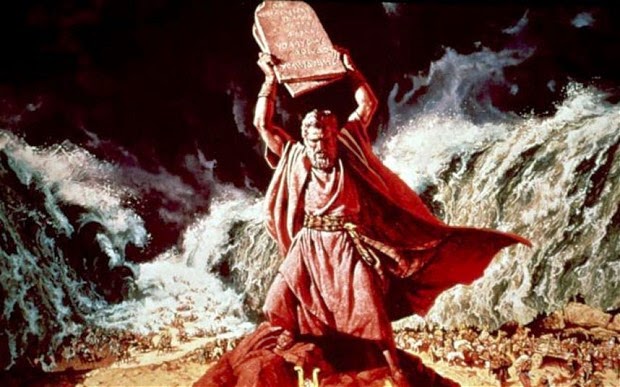
With this in mind, we turn to the story of Moses in Deuteronomy. Moses has led the people to the promised land, but he will not see it. Here a leadership fable reveals the very nature of leadership, and especially of shared leadership. The person who steps out and leads rarely sees the results of such leadership. They write the story of transition and of faithful sacrifice of self, but they do not write the last chapter. The next and last chapter is always written by someone else. Moses’ epitaph is a life well lived in service to God.
Never again did there arise a prophet in Israel like Moses, whom the Lord knew face to face, in all the signs and wonders that the Lord sent him to display in the land of Egypt, to Pharaoh and all his servants and all his land, and for all the mighty acts and awesome sights that Moses displayed in the sight of all Israel.
Moses loved God even though he himself was not perfect like God. Moses loved God’s people even though they did not always get along. Moses loved his partners, not because he needed them, but because God needed them to help Moses fulfill his work. Most people do not know where the ordinary man is buried, though some know where the famous are buried. “No man knows [Moses’] burial place” (34:6). Here is a great prophet who has no great monumental tomb, because of all the things Moses was — he was a humble leader.
Moses is the ordinary man in everyday ordinary life, where the battle of the powers and authorities is waged, with whom and through whom God did extraordinary things. When life is over, we have no fear of death. And when we look back, we will value most the things that Moses valued: the love of friends and family, the love of God’s work well done, and the love of having been part of a blessed community of shalom — of peace.
Rabbi Jonathan Sacks writes, as he ponders Moses’ life and his end:
The greatest tribute the Torah gives Moses is to call him eved Hashem, the servant of God. That is why the Rambam writes that we can all be as great as Moses (Hilkhot Teshuvah 5:2). Because we can all serve. We are as great as the causes we serve, and when we serve with true humility, a Force greater than ourselves flows through us, bringing the Divine presence into the world.
Jesus makes the measure of your love for God the love you show your neighbor. Name the person you find hardest to love. What does that name tell you about the first commandment?
Moses climbs Pisgah, sees the land, and does not enter it. He wrote the story of the transition but not the last chapter. What are you building that someone else will have to finish?

No comments:
Post a Comment