Finding the Lessons

I try to post well in advance of the upcoming Sunday.

You will want to scroll down to find the bible study for the lessons closest to the upcoming Sunday.

The blog will be labeled with proper, liturgical date, and calendar date.

You can open the monthly calendar to the left and find the readings in order.

You can also search below by entering the liturgical date, scripture, or proper. This will pull up all previous posts.

Enjoy.

Search This Blog by Proper and Year (ie: Proper 8B or Christmas C or Advent 1A)

Showing posts with label Genesis. Show all posts

Sunday, August 2, 2026

Proper 16A, August 23, 2026

Proper 16A  ·  Year A
The Thirteenth Sunday
after Pentecost
August 23, 2026
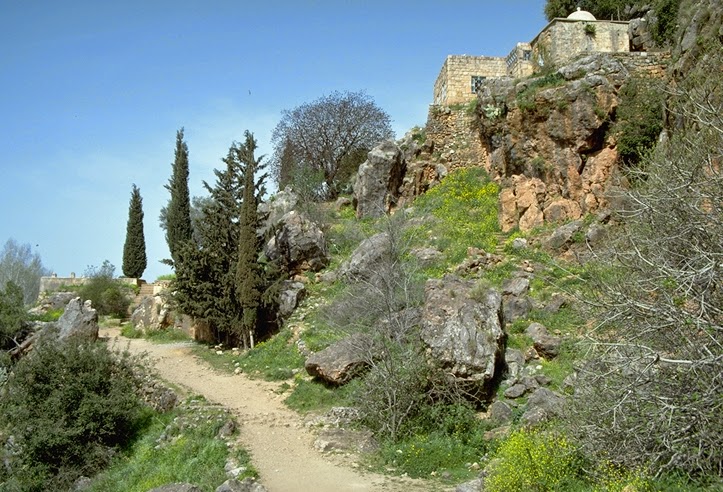
The road to Caesarea Philippi
The Lessons Appointed
Old TestamentExodus 1:8 – 2:10
PsalmPsalm 124
EpistleRomans 12:1–8
GospelMatthew 16:13–20
The Collect of the Day

Grant, O merciful God, that your Church, being gathered together in unity by your Holy Spirit, may show forth your power among all peoples, to the glory of your Name; through Jesus Christ our Lord, who lives and reigns with you and the Holy Spirit, one God, for ever and ever. Amen.

The Book of Common Prayer
A Prayer Before the Word
Meeting Jesus Again for the First Time

I thought I knew you. As my years advance, my list of questions grows longer. Demonstrate your greatness beyond what I envisioned. Show me your reality, because I have yet to see it. I desire to meet you again, perhaps for the first time. I require a genuine encounter. If you are real, show yourself to me. I want to experience you standing directly before me. Amen.

From A Bagman’s Prayer Book, C. Andrew Doyle
Hear These Lessons Preached
St. Luke’s on the Lake, Austin  ·  on the Epistle, Romans 12
The Gospel
Matthew 16:13–20
From the Tradition
In the Liturgy

“Almighty Father, who inspired Simon Peter, first among the apostles, to confess Jesus as Messiah and Son of the living God: Keep your Church steadfast upon the rock of this faith, so that in unity and peace we may proclaim the one truth and follow the one Lord.” — This is the Collect for the Confession of Saint Peter, January 18, and the Gospel appointed for that feast is this same passage. The Church keeps a whole feast on the strength of one man’s answer to a question.

The Confession of Saint Peter, The Book of Common Prayer 1979
The Fathers

“But if you suppose that upon that one Peter only the whole church is built by God, what would you say about John the son of thunder, or each one of the Apostles? … If we too have said like Peter, Thou art the Christ, the Son of the living God — not as if flesh and blood had revealed it unto us, but by light from the Father in heaven having shone in our heart — we become a Peter. … For a rock is every disciple of Christ, and upon every such rock is built every word of the church.”

Origen, Commentary on Matthew, Book XII.10–11
Voices at the Table

“From fisher of fish to fisher of people to keeper of the keys to shepherd. It was the Rock’s final promotion, and from that day forward he never let the head office down again.”

Frederick Buechner, “Peter”

“La predicación de la confesión de Pedro (Mateo 16.13-20) es una oportunidad de retornar al principio de la fe cristiana vis a vis la opinión post moderna sobre el cristianismo en general y quién Jesús es en particular.”

Alvin Padilla, Working Preacher, 2011

“For Matthew the location is also Caesarea Philippi, and perhaps the same shadows of imperial power — or power through its local Jewish proteges of Herod’s family — are in mind. But in Matthew the passage is not such a turning point as it is in Mark.”

William Loader, Murdoch University

The passage for this Sunday’s Gospel is the proclamation of Jesus Christ as Messiah and Son of the Living God. It is Peter’s proclamation on the road to Caesarea Philippi. It is an important theological passage for Christianity, and an important passage within the Gospel of Matthew.

We begin with Jesus’ question to his disciples. This then reveals that Jesus is a great prophet. It isn’t simply that he is compared to the great heroes of the Jewish faith. He is on par with, he is equal to, Jeremiah, Elijah, and John the Baptist. He is not simply a great prophet; he is the greatest of prophets. He is the Christ, Son of the Living God. The message of Jesus is the continuation of the ancient faith of Israel. He is the fulfillment of all the hope of Israel. He is the omega of salvation history. At the same time he is doing something radically new — he is birthing, through word and Spirit, the Church.

Jesus in Matthew’s Gospel is the one who is laying the foundation of a living Word that will withstand the powers and principalities of both this world and the world to come. He is building up living stones and a kingdom of priests to expand the reign of the kingdom of God — this “eschatological temple.” (Allison/Davies, Matthew, 642)

There is a great debate among scholars as to Matthew’s own Christology. Did he think of Jesus as God in the same way as John and his Gospel? In point of fact no direct statement is made. Yet in my opinion the author of this Gospel indeed understands Jesus as God. For in my reading of Matthew, Jesus not only is the continuum of messianic hope, he is the culmination as well. He is here on this road proclaimed as the Son of the Living God. Matthew’s Gospel is clear about its revelation: Jesus is one with God, and therefore transcends the simple relationship of follower or prophet of the Most High God.

Furthermore, this Jesus is the one who has been given the power and authority to call forth the new community of faithful followers into the kingdom. In this section of the narrative, in this moment, on the road to Caesarea Philippi, Jesus is seen as Lord of this new kingdom. He is in the miracle of loaves and fishes, in the stilling of the storm; he is bringing together a new people of God. This new people of God is made up of those who, unlike many of the religious powers of his day, have not rejected him, and those who are on the fringes of religious society — to include Gentiles. This is the God made man who, in sitting and eating with sinners and tax collectors, is binding together a new family of God.

Jesus in his ministry, and from this point on in Matthew’s Gospel, is passing along the inheritance of the kingdom of God. Jesus is gathering in and multiplying the numbers of Abraham’s descendants. He is, through the power of the Holy Spirit, taking the spirit that has been under the custodial leadership of the religious authorities of his day and placing that spirit upon a new people, a growing people, a diverse people — the ecclesia, the People of God.

The image of this new people of God is not the perfected disciple but the disciple Peter: the one whose faith led him to step out of the boat, the one whose faith has revealed the true nature of Jesus, the one who also will struggle with his faith and deny him during Passiontide. This imperfect human is the one upon whom the church, the new ecclesia, is built.

Jesus is the Son promised in 2 Sam 7:4–16, the king who builds the eschatological temple. This temple is the church. Like the old temple, it is founded on a rock. But unlike the old temple, it has no geographical location. It is not in Jerusalem. The new, eschatological temple is a spiritual temple. It stands under the rule: “Where two or three are gathered in my name, there am I in the midst of them” (18:20; cf. Jn 4:21). Matthew is thus at one with the rest of the NT in substituting for the holiness of place the holiness of a person: holy space has been Christified.

Allison and Davies, Matthew, 642

Allison and Davies contend — and I think it is a great image — that just as Jesus is himself the New Covenant, so Peter is then the New Abraham. They write:

The parallels between 16:13–20 and Genesis 17:1–8 indicate that Peter functions as a new Abraham. He is the first of his kind, and he stands at the head of a new people. Peter is, like Abraham, a rock (cf. Isa 51:1–2), and the change in his name denotes his function. What follows? Peter is not just a representative disciple, as so many Protestant exegetes have been anxious to maintain. Nor is he obviously the first holder of an office others will someday hold, as Roman Catholic tradition has so steadfastly maintained. Rather, he is a man with a unique role in salvation history. The eschatological revelation vouchsafed to him opens a new era. His person marks a change in the times. His significance is the significance of Abraham, which is to say: his faith is the means by which God brings a new people into being.

Allison and Davies, Matthew, 642ff

This week’s Gospel lesson is as much about Jesus as it is about Peter. We need leaders in each Episcopal congregation, clergy and lay, who are ready to give voice to the proclamation of Jesus as Son of the Living God and Lord of all, and to incarnate their faith by living a living Word that is Gospel. We need leadership who will also see themselves not simply as disciples of a particular kind, but in the tradition of Peter and Abraham, ready to take steps out into the world. We need leadership ready to be the stones upon which new churches are designed and built. We need leaders who through their ministry are ushering in a new era of Gospel proclamation and mission. We need leaders by means of whose faith God is bringing a new people, a new ecclesia, into being.

The Epistle
Romans 12:1–8
From the Tradition
In the Liturgy

“And here we offer and present unto thee, O Lord, our selves, our souls and bodies, to be a reasonable, holy, and living sacrifice unto thee.” — Paul’s appeal in Romans 12:1 is not an idea the Church admires from a distance. It is the sentence we say over the bread and wine, about ourselves, at every Rite One Eucharist.

The Prayer of Oblation, The Book of Common Prayer 1979, Rite One, p. 336
Voices at the Table

“To be enslaved to sin is to have one’s body commandeered every bit as much as one’s soul.”

Mary Hinkle Shore, Preaching This Week, WorkingPreacher.org, 2011

“Paul’s main point about spiritual gifts, mentioned in verse 6, is that God has given us these as members of the body of Christ. So we are to use the particular gift God has given us to help the body function, not to promote ourselves or show how we as one body part are better than others who are another body part.”

Mark Reasoner, Preaching This Week, WorkingPreacher.org, 2008

Romans is about God’s unconditional, one-way love that in the end will conquer all powers and principalities and make us heirs and family members with God.

Paul invites the members of the community at Rome to make an offering in response to God’s action on our behalf. We are invited to present ourselves and our very life as a sacrifice — not like those sacrifices made in the Temple on our behalf, but to be the sacrifice and offering to God, because in so doing we will experience transformation.

Our grateful response to God is to discern our life and its patterns as a reflection of the God who loves us. We can easily go back to the way of the world. We can try to live by the law. We can try to purchase or buy our sacrifice, but nothing will lead to the same life that God is freely offering to each of us. So we have to begin again. We must realize that we must daily start anew. We respond to God’s never-failing love for us by each day committing ourselves to a grateful response.

Our bodies, our gifts, our very life are given to us as a part of the whole life of God on earth. We are members of a great cloud of witnesses, a great body of Christ. Each of us is given part of the work of carrying out God’s mercy in the world. The Holy Spirit, which makes us part of the one body of Christ, also enlivens us to be an active member in our community and out in the world. We are all given unique qualities which reflect the God we believe in and the God who animates all creation. Yet we are not independent but interdependent members. We depend upon one another and are part of one another’s life and livelihood.

This interdependence is for the building up of the kingdom of God and the manifestation of grace in the world around us. Our uniqueness and our unique gifts are part of the wider community and its overall functioning. Gifts are each dependent upon the others. So Paul continues: as one body in Christ, the gift of prophecy (inspired preaching) is dependent upon the gift of ministry — the administration of aid and distribution of alms. Teaching is dependent upon exhortation, the urging of others to have faith. (See Chris Haslam’s site for the breakdown.) All of these are gifts that work together in harmony and unity.

For as in one body we have many members, and not all the members have the same function, so we, who are many, are one body in Christ, and individually we are members one of another. We have gifts that differ according to the grace given to us: prophecy, in proportion to faith; ministry, in ministering; the teacher, in teaching; the exhorter, in exhortation; the giver, in generosity; the leader, in diligence; the compassionate, in cheerfulness.

Romans 12:4–8

As one body there are many members, and we are all in need of the other.

I think the challenge here is that we don’t truly engage this notion that all have gifts. We don’t really take time to figure this out with people. We are typically only interested in the gifts that help run the church. Any gift that might take more time or cause a disruption in the gentle order of things is a gift discarded. We have decided that the gifts of preaching, teaching, church planting, and leadership belong only to those with advanced training and three years of master’s study.

Paul points out the truth of Jesus and his call to those first fishermen. Paul points out the truth of the call to the first apostles appointed by the Holy Spirit — none of them had an MDiv. They were all kinds and sorts of people. They were poor and wealthy. They were wise and simple. Yet all received their gifts from the Holy Spirit. They gave their lives to the health and vitality of the kingdom of God.

So I wonder: do we dare preach the truth this Sunday? Even though it will cause a fair bit of trouble for those in power and enmeshed in the hierarchy… courage is probably the right tactic here.

The Old Testament
Exodus 1:8 – 2:10
From the Tradition
The Fathers

On the midwives who lied to Pharaoh: they “were according to their degree approved and rewarded of God. For if a person who is used to tell lies for harm’s sake comes to tell them for the sake of doing good, that person has made great progress. … It is one thing that is set forth as laudable in itself, another that in comparison with a worse is preferred.” — Augustine will not let us call the deception good; he will only call it better. Worth arguing with before Sunday.

St. Augustine, On Lying (De Mendacio), ch. 15
Voices at the Table

“This ancient text from Exodus echoes powerfully in our congregations, nation and world: issues of race and politics, religion and politics, gender and power, the war on terror, debates over immigration policy, the inequities of our global economy, congregational mission and hospitality to the stranger, and all manner of suffering and bondage that threaten the individuals and families with whom we minister.”

Dennis Olson, Preaching This Week, WorkingPreacher.org, 2008

“The story highlights the cleverness and understated bravado of the women agents who defy Pharaoh.”

Amy Merrill Willis, Preaching This Week, WorkingPreacher.org, 2011

“It’s a courageous act of civil disobedience that changes history, for one of the boys that is spared will be called Moses and he will lead the Israelites out of Egyptian captivity.”

David Lose, Dear Working Preacher, 2011

Today’s passage is the beginning of the story of Moses, and it starts as Pharaoh goes mad. He attempts to kill all the children in order to decrease the growing population of Israelites. Like a “genesis” narrative — a “how did we come to be in Egypt” narrative — it is a story of beginnings. It begins with these words: “These are the names of the sons of Israel who came to Egypt with Jacob, each with his own household … Then Joseph died … and that whole generation.”

The Pharaoh no longer remembers Joseph and his family. There are too many Israelites now, and he is using them to build up his cities. They no longer rule side by side; instead they are slave labor. Their numbers continue to increase, so Pharaoh tells the midwives to kill the male babies — but they resist. Moses is saved. In fact he is saved by a daughter of Pharaoh and brought up as an Egyptian. So the repetition now begins: the favorite son, saved from death, is now given life — one that will in the end save God’s people and bring them a bit further on their journey.

The story of the sacrifice of the male children is of course echoed in the story of Jesus and the death of the innocents in Matthew’s Gospel. This is important, because in the Gospel of Matthew, Moses is a prefiguring character. We already talked about the theology of this in our last post. In Matthew’s Gospel, Jesus is like Moses — a great prophet. Jesus is protected from the genocide of male children. He returns from Egypt. Jesus, like Moses, fasts for forty days. Jesus is the great shepherd of God’s sheep and is sent to free them because of God’s passion for them. Even Matthew’s transfiguration is filled with Moses typology. (Richard Hays in Echoes of Scripture in the Gospels certainly draws this parallel well; it is present in Allison and Davies’ work as well.)

To Carry Into the Week

Jesus asks the disciples what other people say before he asks what they say. Whose account of Jesus have you been living on second-hand, and what would it cost you to answer the question yourself?

Paul says the gifts differ. Which gift in your congregation has been discarded because it would take too much time or disturb the gentle order of things?

Saturday, August 1, 2026

Proper 15A, August 16, 2026

Proper 15A  ·  Year A
The Twelfth Sunday
after Pentecost
August 16, 2026
The Collect of the Day

Almighty God, you have given your only Son to be for us a sacrifice for sin, and also an example of godly life: Give us grace to receive thankfully the fruits of his redeeming work, and to follow daily in the blessed steps of his most holy life; through Jesus Christ your Son our Lord, who lives and reigns with you and the Holy Spirit, one God, now and for ever. Amen.

The Book of Common Prayer
A Prayer Before the Word
When I Feel Unworthy

You tell me I am clad in righteousness, but I still feel undeserving. My sins and failures from my past seem like reasons for disqualification. But you cover me anyway. You call me yours anyway. Enable me to don your grace like a robe I will never remove. I wasted too much time attempting to earn the love you provided freely. I believe I must improve and accomplish more to demonstrate my worth. But you never asked for that. You just asked me to come. So here I am. I am grateful for your love, which accepts my true self. Amen.

From A Bagman’s Prayer Book, C. Andrew Doyle
Hear These Lessons Preached
St. Peter’s, Woodville  ·  Proper 15A, August 20, 2017
The Gospel
Matthew 15:10–28
From the Tradition
In the Liturgy

“We do not presume to come to this thy Table, O merciful Lord, trusting in our own righteousness, but in thy manifold and great mercies. We are not worthy so much as to gather up the crumbs under thy Table. But thou art the same Lord whose property is always to have mercy.” — The Canaanite woman’s answer is not only in the Gospel. Cranmer put it in our mouths at the altar rail. Every time we pray the Prayer of Humble Access we are quoting her.

The Prayer of Humble Access, The Book of Common Prayer 1979, Rite One, p. 337
The Fathers

“He said, It is not meet, and she said, Truth, Lord; He called them children, but she masters; He used the name of a dog, but she added also the dog’s act. … Confidence and strength, says she, by no means; nay, I am even full of shame. Yet nevertheless my very shamelessness do I put forward for entreaty; He will respect my confidence.

St. John Chrysostom, Homilies on the Gospel of St. Matthew, Homily LII
The Anglican Divines

“A guest, I answer’d, worthy to be here: / Love said, You shall be he. … You must sit down, says Love, and taste my meat: / So I did sit and eat.”

George Herbert, “Love (III),” The Temple, 1633
Voices at the Table

“As far as I know, there is only one good reason for believing that he was who he said he was. One of the crooks he was strung up with put it this way: ‘If you are the Christ, save yourself and us.’ Save us from whatever we need most to be saved from. Save us from each other. Save us from ourselves.”

Frederick Buechner, “Messiah”

“Like the story of the woman who as an outsider experiences God’s mercy and so challenges a too-narrow tradition that would want to restrict God’s mercies to a chosen few, so these sayings invite a reexamination of our hearts and call us to a new appraisal of the expansive reach of God’s mercies.”

James Boyce, Preaching This Week, WorkingPreacher.org, 2011

Now this Sunday we have an interesting passage. In order to engage it we must realize that it comes after a confrontation scene with the religious leaders. Jesus has just been confronted by the authorities, who are challenging him that he is not following the tradition of his faith ancestors. They are acting somewhat like inspectors who are pretty sure the disciples have not been washing their hands before they sit down and eat. The passage is a direct engagement with the rules of the day, which understand the tradition of the religious authorities to be outside the tradition of Scripture. And so Jesus, in our passage today, teaches the crowd around him something different.

Scholars tend to look upon this text as trying to deal with the difference between the Matthean communal rule of life and that of their forebears. At the same time we must recognize that while this may be true, we also know that this engagement with the religious authorities was one of the key mitigating factors that led to Jesus’ crucifixion.

Jesus is proclaiming a message that connects the new emerging communities with the ancient law of Israel and their prophets. The new communities that Jesus is speaking to are certainly continuing Jewish communities. But the Gentile mission too was quickly to engage as a full member of the evolving understanding of God’s widening kingdom. Jesus is preserving the good news of a God who is in relationship with his people and who makes promises to be with them always, even to the end of the ages; a God who promises the abundance of creation. So there is a sense that Jesus is continuing and reforming. (Allison/Davies, Matthew, 537)

Jesus’ teaching is essential to a global mission. Jesus’ teaching is the precursor to the Apostolic Decree from Acts 15:20, 29 and 21:25, wherein the first community of followers of Jesus quickly laid out the boundaries that would enable the Jew and the Gentile to worship God through the particular revelation of Jesus Christ without getting in one another’s way. The rule prohibited four things: eating meat sacrificed to idols, eating blood, eating strangled animals, and intercourse with near kin. (Allison/Davies, Matthew, 538) These were the rules.

“What comes out of the mouth proceeds from the heart, and this is what defiles.”

Matthew 15:18

The real focus, I think, for this passage has to be that text. This is a key component of Matthew’s Gospel — indeed of the whole of the Gospels. It is mentioned throughout the Gospel narrative. Too often religion gets overly focused upon ritual, and in so doing loses sight of the key component of faith: the direction, through the heart, of one’s life and work.

It is one’s intention and attitude that is a chief characteristic of Jesus’ words to his followers. It is perhaps the center of Jesus’ own moral teaching. Integrity is the result of harmony between thought and act. Integrity is the result of an action based upon the living word of God, brought into being through the vessel of one’s heart and delivered by mouth and hands.

In the end, Jesus’ own teaching is why he must accept the challenge of the woman. He too must act in accordance with his own teaching, and in so doing shows the integrity of his words and his actions. All too many preachers will get hung up on the woman’s challenge. Do not miss the challenge Jesus is offering to us who craft so many rules for the segregating of our own communities.

We also might read Jesus’ words in the context of his wider teaching. When we do this and hold this passage in tension with it, we might ponder the idea that Jesus is being satirical in his response. Satire shows continuity with the statements about eating grain or sitting with sinners. It also has continuity with the other passages where women followers and women outside the community (like the Samaritan) are engaged by Jesus in a positive way. Instead of reading our biases into the passage, we might wonder whether the two were not jousting out of satire, rather than our overlaying postmodern ideas.

This is not particularly new teaching that Jesus is offering his followers. In fact most religious reform is not new. It is rather a rereading, reinterpreting, and revocalizing of the ancient words of psalms, prophets, and rabbis. It is to say that keeping the commandment was good, but that interiorizing the commandment was essential religious work.

The Psalms, the prophets, and the rabbis all attest the necessity of cleansing the heart and purifying interior disposition. In the First Gospel, however, there is a regular and emphatic dwelling on the theme, so that Matthew remains a constant reminder that Jesus laid an extraordinary emphasis on the real inner religious significance of the commandments.

Allison and Davies, Matthew

We are challenged by this passage a great deal. As a Church we are working through divisions on the different ways of acting out our faith — liturgy, sacrament, and polity. Yet I think we are being judged by those who do not come to church but seek God. We are being looked upon by those who love Jesus and believe he would have similar criticisms of today’s church.

I think we are challenged to hold up today’s Scripture and ask ourselves, as individuals and as preachers and teachers: what are the things we are most concerned about? What are the items from the last meeting we went to that did not go our way, and so now we are harboring as essential to the life of our church? What are the items we hold most dear and most important: budget, altar guild, ritual, grounds, coffee hour? What are they, and how are they connected to the religious heart of our church? How are the things we hold as most important connected to the religious heart of Jesus’ Gospel?

This is a good exercise. Perhaps we should do the work corporately, and then offer ourselves to God and be reconciled to God, our neighbor, and the world. Then perhaps we can take a genuine step forward in mission, reconnecting our words and actions with our own heart and with the heart of Jesus and his Word.

The Epistle
Romans 11:1–32
From the Tradition
In the Liturgy

“O God, you made us in your own image and redeemed us through Jesus your Son: Look with compassion on the whole human family; take away the arrogance and hatred which infect our hearts; break down the walls that separate us; unite us in bonds of love; and work through our struggle and confusion to accomplish your purposes on earth; that, in your good time, all nations and races may serve you in harmony around your heavenly throne.” — Paul’s warning to the Gentile branches not to boast has a collect of its own.

A Prayer for the Human Family, The Book of Common Prayer 1979, p. 815
Voices at the Table

“God will not give up on us. His promise of life is centered in the death and resurrection of his Son, Jesus Christ. He is the Deliverer from sin, death, and the power of the devil for Jew and Gentile alike.”

Paul S. Berge, Preaching This Week, WorkingPreacher.org, 2008

“What a wonderful vision: God wants to have compassion towards all people — and will!”

William Loader, Murdoch University

Paul has made his case — one that I do not agree with — that Israel will not be saved at the last day. My view is in fact a generous view, given the fact that most Jews today do not believe as I do that reconciliation with God is possible by God’s doing and through God’s love. Some may be saved, he says, but not many.

Paul then explains how, like him, both Jews and Gentiles may come to believe, and that he is a chief example of how God is working his purpose out with his people the Israelites. God is faithful, and God intends to save his people. The Israelites are still his chosen people. God will lead the Israelites to this new understanding by means of the Gentile Christians and their faithfulness, he says.

Gentile Christians, who were once unfaithful and disobedient, are now part of the family of God. They are and can be examples to the Jews, and show them how to respond to the grace and mercy and love of God. They are to be examples to the world, to Jew and Gentile alike, of how to live with God. I think this is the part of the passage that will preach.

As a follower of Jesus who receives grace and the Spirit, I have an opportunity to live a life worthy of my saving. I have an opportunity, out of gratitude, to reflect the love of God to all people. In so doing they will be drawn towards God and God’s love.

I am not to spend a lot of time worrying about who is saved and who is not. Instead my work as a God-fearer and Jesus follower is to live a life of grace. I am to be, as C. S. Lewis said, a little Christ. In so doing, others will become as I am and in turn be Christs out in the world. This is our work. Freed from the law and forever united by the love of God, I am to respond out of gratitude and live a life of the Spirit for all the world to see — never boasting in my own saving work, but in the work of my Savior Jesus Christ.

The Old Testament
Genesis 45:1–28
From the Tradition
In the Liturgy

“O God, the Father of all, whose Son commanded us to love our enemies: Lead them and us from prejudice to truth; deliver them and us from hatred, cruelty, and revenge; and in your good time enable us all to stand reconciled before you.” — Joseph stands before the men who sold him and weeps. The prayer book knows how long “your good time” can take.

For our Enemies, The Book of Common Prayer 1979, p. 815
Voices at the Table

“The text for today describes a moving scene of reconciliation, the self-revelation of Joseph to the brothers who sold him into slavery many years before, and gives us the theological lens through which to view the whole story of Joseph.”

Kathryn Schifferdecker, Preaching This Week, WorkingPreacher.org, 2008

“Joseph’s complicated family history teaches us that Israelite identity was a cultural and religious one, and not an ethnic or even national one in his time — and for some time to come.”

Wil Gafney, Preaching This Week, WorkingPreacher.org, 2011

“Once powerless at the bottom of a pit, outnumbered by brothers who hated him, Joseph now gets to decide who will live and who will die. Having that power does not necessarily make Joseph a bad guy, but his use of that power to control those around him surely does, no matter how much he cries.”

Cameron B. R. Howard, Preaching This Week, WorkingPreacher.org, 2014

In our passage for this week we have the great reconciliation moment between Joseph and his brothers. There has of course been a great drought, and his brothers have come to Egypt for help and find themselves before Joseph, who now oversees on behalf of the royal family. (Spoiler alert.) Joseph forgives them in the end. Joseph brings his brothers and family to Egypt, thereby completing the journey of the tribe into Israel and setting up the story of Moses.

I really like what Rabbi Jane Rachel Litman has to say in her Beliefnet article:

This week’s Torah portion, Vayiggash, probes the emotional tension of coming out after a lifetime of passing. It brings us to the dramatic climax of the Joseph story. Though a Hebrew, Joseph is now living as an Egyptian lord. He dresses as an Egyptian, he speaks as an Egyptian; in every outward respect he is Egyptian. His true identity is known only to himself and God. … From the time of his imprisonment until this climax, Joseph has assumed a more hardened and calculating face to the world. He cleverly guides Pharaoh into making him vizier of Egypt. He strategically deals with a great famine and makes a profit. He lies to his brothers and tests them. … At last, in this week’s portion, Joseph must choose whether to allow himself to be vulnerable — to be seen for who he is. … It is a moving moment indeed when the Torah recounts how Joseph sends everyone away, so that he is alone with his brothers, his “own kind,” when he reveals himself. Finally, letting go of his worldly, calculating, Egyptian facade, he comes out. “I am Joseph,” he sobs.

Rabbi Jane Rachel Litman, “Joseph Comes Out,” Beliefnet

The idea that Joseph, like others before him, has had to hide and be someone else for so long is not a new theme in history. It is almost as if the old Joseph has died, as the brothers wished. The moment of transformation comes for him. He can stay hidden or be revealed. He can help his family or leave them to suffer the consequences. In a costly moment to himself he is able to be his created self — and in this way there is also aid for his family, and in the end reconciliation. While the story is clear that Joseph himself has been wronged, almost killed and sold into slavery, he must himself also pay a cost for reconciliation. He must unveil himself of his hatred and anger.

Oftentimes in reconciliation processes we are very attentive to what the other must do in order for us to move forward. Rarely are we aware of our own cost for the process, and what we will lose in order to gain reconciliation.

To Carry Into the Week

What are the items we hold most dear — budget, altar guild, ritual, grounds, coffee hour? How is each of them connected to the religious heart of Jesus’ Gospel?

Joseph had to unveil himself of his hatred and anger before reconciliation could come. What would you have to lose this week in order to gain it?

Saturday, June 13, 2026

Proper 13A August 2, 2026


Prayer

Loving God as a mother tenderly gathers her children and as a father joyfully welcomes his own, so in the compassion of Jesus you nurture and nourish us, feed us and heal us.  Let the bread Jesus multiplied then in the wilderness be broken and shared among us now.  May the communion we experience with each other in this holy meal, compel us to seek communion with everyone in loving service toward all. We ask this through our Lord Jesus Christ, your Son, who lives and reigns with you in the unity of the Holy Spirit, God for ever and ever. Amen.

From Prayers for Sunday and Seasons, Year A, Peter J. Scagnelli, LTP, 1992.


Some Thoughts on Matthew 14:13-21

"Dostoevsky, in the magnificent "The Grand Inquisitor" chapter of The Brothers Karamazov, ties the matter of bread and hunger to the temptation of Jesus in Matthew 4:1-11."

Commentary, Matthew 14:13-21, (Pentecost 7), Mark G. Vitalis Hoffman, Preaching This Week, WorkingPreacher.org, 2011.


"The last supper makes sense in the light of all the other meals including this one and they make sense in the light of the vision of liberation and reconciliation which inspired them. To receive him in bread and wine is also to participate in the vision and nourishment which makes it possible."
"First Thoughts on Year A Gospel Passages in the Lectionary," Pentecost 7, William Loader, Murdoch University, Uniting Church in Australia.

Oremus Online NRSV Gospel Text


Not unlike the grace imparted in the Eucharistic meal the feeding of the five thousand connects Jesus' ministry of feeding people with God's continuous outpouring of love.

Certainly, the Gospel author tells his story in such a way that the feeding events in the Matthean narrative are linked.  They give shape and image to the final feast.  Matthew's vision of Jesus as Christ and as provider shapes the story even in the telling.

This passage comes in the midst of the fourth largest section of the Gospel. It echoes the abundance of the previous passages on the kingdom of God and not unlike a sacrament it puts flesh on the images of parables that Jesus has been offering those who have ears. In a way, the feeding of the five thousand is an incarnation of the kingdom parables.  Jesus is showing that the kingdom is all around and that God's grace abounds in the fields and on the hill tops not only in the sanctuaries.  He is showing that the mandate to care and love and feed one another is a commandment that will not be confined to the rules of the religiously powerful.

He is also manifesting a very real kingdom community.  The signs and stories, the symbols and the miracles, are now embracing an ever expanding vision and reality which is the growing kingdom.

The New Testament scholar Gerhardsson comments:

In Matthew's time the Eucharist had probably not yet been made fully distinct from the satiating common meals in the early Christian communities.  Thus Eucharistic symbolism does not exclude the possibility that the story is concerned with the satisfaction of elementary bodily hunger -- and vice versa."(Allison/Davies, Matthew, p 492)

The Davies and Allison Commentary continues the theme:

In other words, the spiritualizing of 14:13-21 on Matthew's part does not discount the equal emphasis upon Jesus as the one who can meet mundane, physical needs.  Our pericope therefore both shows Jesus' concern for such 'non-religous' needs and likewise demonstrates his ability to act in accord with that concern.  So the christological assertion that Jesus is  Lord of all seems implicit. (Ibid)
In the miracle of the multiplication of fish and loaves the Christian Church as a vision of Jesus Christ, the second person of the Trinity, through whom all things were made.  We have a vision of Jesus modeling a stewardship of abundance that insures that the world is not simply a place of consumption ("This is a deserted place, and the hour is now late; send the crowds away"); but rather that all creation is seen as bountiful for a sustainable kingdom of God ("They need not go away.")

The miracle challenges us to see the possibilities of a church at work in the world.  It challenges us to move out as missionaries into our culture of scarcity and seek to transform the world by bringing real food to all those who are hungry.  Instead of sending them away to other agencies or expecting the government to care we, the Episcopal Church and the Church, must take our rightful place as the hands of God.  We must feed the world and make real the kingdom. We must make the Gospel story of our bible, the one of parable and miracle, a reality.  Only when we re-engage the world as the incarnational body of Christ at work (meeting the very real needs) will the world listen to the Good News we also offer.

For far too long the Church has squabbled over the idea that it is either evangelism or outreach. This Gospel lesson reminds us that service to the poor, with whom Jesus identified himself, and the Gospel of the Kingdom of God go hand in hand.

Some Thoughts on Romans 9:1-5

"People these days ask God to damn lots of things. I have, too; but I've never had the nerve to include myself on the list. Paul did, offering to surrender his own salvation in Christ if it could make a difference."

Commentary, Romans 9:1-5, Matt Skinner, Preaching This Week,WorkingPreacher.org, 2011.

"The identity of the Messiah is the greatest of God's gifts to Paul's kindred according to the flesh. This brings Paul to the only words that can express the focus of all that he has said in these introductory words?a doxology of praise to God?'God blessed forever. Amen!'"

Commentary, Romans 9:1-5, Paul S. Berge, Preaching This Week,WorkingPreacher.org, 2008.


Romans is a magnificent text by Paul.  We have covered a great deal of theological breadth.  He has offered an understanding of how God is at work in the world even now and making it new. He has given us an understanding of the life of the disciple who follows Jesus, is baptized, and forever adopted into union with God.  He has given us hope in our suffering and an understanding nothing can separate us from the love of God.

In this part of Romans he deals with the issue that the Jews have rejected Christ and the Good News of Salvation.  Paul, a Jew himself, wishes this was not so.  Paul would do anything to help the Jews come to Christ.  Then Paul offers these insights. They are insights worth pondering as we seek a healthy relationship with our brothers and sisters with whom we share the Abrahamic faith.

  • The Jews also called the Israelites are inheritors of God's promise to Abraham.  They are adopted like us and children of God.
  • God has been present with them in the desert and in the Temple and continues his presence among them.
  • God is faithful to his promises and so will keep his covenants made with their forefathers - Adam, Noah, Moses, and David of Abraham, Isaac and Jacob.
  • God has given them the law to follow and it expresses his will at Sinai and his desire for them to worship.
  • Their continual and faithful worship is essential in their life with God.

Paul though also believes that Jesus is their gift as well.  God is the one who chooses and not the Jews. This is where Paul believes they have gone wrong. God has chosen Jesus to fulfill the law and to unite all humanity to God.  So, while they have so much they lack the one thing.

I think the challenge this passage presents to us is the reality that God is continuing to move and work in the world around us. We like the Jews of Paul's time may be too assured in our certainty and may in fact - like them - be missing the work the Holy Spirit is undertaking outside our churches. Just as the Jews could not see a religion freed to the masses beyond the confines of the Temple so too we may have a difficult time seeing God at work in the world around us.  We may count upon our lineage and adoption too much.  Paul is willing to give it all up to participate in the emerging faith around him. What are we willing to give up so that others may have life and have it abundantly?


Some Thoughts on Genesis 32:3-31


"The story of Jacob's wrestling with the angel provides an embarrassment of riches for homiletical possibilities."

Commentary, Genesis 32:22-31, Sara Koenig, Preaching This Week, WorkingPreacher.org, 2010.

"Gen 32 needs to be taken as a whole with its theophany (vv.1-2), prayer for deliverance (vv.9-12) and encounter with God (vv.24-31)."

Genesis 32:22-31, Pentecost 12, Commentary, Background, Insights from Literary Structure, Theological Message, Ways to Present the Text. Anna Grant-Henderson, Uniting Church in Australia.

"God does not punish Jacob's conflictive character, but challenges it and reshapes it so that Jacob is able to live into his promised destiny as Israel, which according to verse 29 means 'one who strives with God and humans.'"

Commentary, Genesis 32:22-31, Amy Merrill Willlis, Preaching This Week, WorkingPreacher.org, 2014.


Oremus Online NRSV Old Testament Text


This is a climactic moment in the story o f Jacob. He comes to terms with his brother Esau. A virtual army of men is on its way. Jacob is afraid and pleads to God, 
"O God of my father Abraham and God of my father Isaac, O Lord who said to me, ‘Return to your country and to your kindred, and I will do you good,’ I am not worthy of the least of all the steadfast love and all the faithfulness that you have shown to your servant, for with only my staff I crossed this Jordan; and now I have become two companies. Deliver me, please, from the hand of my brother, from the hand of Esau, for I am afraid of him; he may come and kill us all, the mothers with the children. Yet you have said, ‘I will surely do you good, and make your offspring as the sand of the sea, which cannot be counted because of their number.’"
Jacob then sends an offering of great value to his brother hoping that he will accept him. 

Then he lays down to sleep. This is the great theophany in which God comes down and wrestles with Jacob until daybreak. 
"a man wrestled with him until daybreak. When the man saw that he did not prevail against Jacob, he struck him on the hip socket; and Jacob’s hip was put out of joint as he wrestled with him."
Not unlike his birth and how he held on to Esau's ankle, Jacob would not let go of the angel/God/man until he was blessed. Jacob was a man of tenacity! God then gives Jacob a new name, "You shall no longer be called Jacob, but Israel, for you have striven with God and with humans, and have prevailed.” Jacob gives the place a name, and then is freed and continues his journey. 

In this story we see the reconciliation of brothers. We also see the blessing not simply of Isaac but that God's blessing itself rests upon Jacob. Abraham's line continues. It is an origin story of a kind where in we now understand from whence comes the people's name and how they are deeply connected from the age of the Temple to the patriarchs and matriarchs. 

We do well to remember that these cultic stories, passed down, were eventually pulled together through a series of editors and scribes working to unite the traditions of Israel at the time of David and Solomon. 


Wednesday, June 10, 2026

Proper 10A, July 12, 2026


Prayer

Creator God, unceasingly at work in the field of humanity sowing the good seed and awaiting its yield, let your Spirit move in power over us to transform our hearts into the good soil you seek. Then may your word bear fruit a hundredfold in our deeds of justice and peace, and thus reveal to a world that eagerly awaits its liberation the blessed hope and glorious freedom of your reign.We ask this through our Lord Jesus Christ, your Son, who lives and reigns with you in the unity of the Holy Spirit, God for ever and ever. Amen.

From Prayers for Sunday and Seasons, Year A, Peter J. Scagnelli, LTP, 1992.


Some Thoughts on Matthew 13:1-23

"This is not about what good soil we are, and how well we understand the divine mysteries. This is about what God is doing in staggering numbers."

Preaching Matthew 13:1-9, Anna Carter Florence, Lectionary Homiletics sample.

"The parable of the careless sower, the miraculous harvest, the helpless, hapless seeds, or the good soil? Which brand name(s) do you prefer? Whichever one(s) you pick, 'let's hear something we've never heard before.'"

"Rebranding the Parable of the Sower," Alyce McKenzie, Edgy Exegesis, Patheos, 2011.


Oremus Online NRSV Gospel Text


The setting for this parable is on the edge of the Sea of Galilee. There are many people following Jesus now and they are pressing in on him. He is offering them something they are not receiving elsewhere. He is perhaps helping them see that the world does not have to be the way it is and that the reign of God is at hand. He is sharing with them his vision of the kingdom of God and inviting them to realize that the change begins in their own lives. This band of disciples and Jesus are living on the edge of the culture and of their faith but here they are finding companionship along the way. Herein on the Sea of Galilee they are finding that perhaps there are many who feel they live on the edge.

As the people press in on Jesus he gets in a boat and begins to teach them from this place. One can imagine the people sitting along the edge amidst fishermen repairing their nets and boats. They sit and stand and listen.

Jesus chooses a very pastoral parable. Parables of course are stories with many possible meanings. Martin Luther said that one must depend upon the Holy Spirit to open their deep meaning to the person listening. Jesus even says:

The reason I speak to them in parables is that ‘seeing they do not perceive, and hearing they do not listen, nor do they understand.’ With them indeed is fulfilled the prophecy of Isaiah that says: ‘You will indeed listen, but never understand, and you will indeed look, but never perceive. For this people’s heart has grown dull, and their ears are hard of hearing, and they have shut their eyes; so that they might not look with their eyes, and listen with their ears, and understand with their heart and turn— and I would heal them.’ But blessed are your eyes, for they see, and your ears, for they hear.

It is probably worth spending a little time this Sunday teaching about what parables are and the nature of them. Many people have heard them, but most people don't really know what they are; how many they are; or that they were a natural part of teaching during Jesus time.

The text is divided into two parts. The first is the actual teaching, and the the explanation of the teaching. Both are important and both have their place, but I would suggest to you that you must choose to deal with Jesus' parable or Jesus' teaching of the parable.

Let us simply go over the teaching of the parable by Jesus first. Certainly people in Jesus time were more connected with their food sources and where their food comes from. Unlike us today, most of them would have had small gardens. Certainly there was a growing dependance upon farmers, but unlike the industrial age when we see whole economies depend upon foreign food production, people in the time of Jesus all farmed a little. So it is easy to understand his teaching. The sowers sows the seed this is the good news. The ground is us. We can be fruitful or not. We can be like the hard ground, the rocks, or the thorns. We can let birds come and gather it up. These are hard times and much can happen. Here is what Jesus says:

When anyone hears the word of the kingdom and does not understand it, the evil one comes and snatches away what is sown in the heart; this is what was sown on the path.

As for what was sown on rocky ground, this is the one who hears the word and immediately receives it with joy; yet such a person has no root, but endures only for a while, and when trouble or persecution arises on account of the word, that person immediately falls away.
As for what was sown among thorns, this is the one who hears the word, but the cares of the world and the lure of wealth choke the word, and it yields nothing.

But as for what was sown on good soil, this is the one who hears the word and understands it, who indeed bears fruit and yields, in one case a hundredfold, in another sixty, and in another thirty.”

I think those gathered around Jesus heard this parable and thought about God. Perhaps some of the more religiously astute remember the prophecy of JEroboam from 1 Kings 14:7-11. In this story the prophet Ahijah tells Jeroboam that because he abandoned God and worshipped false Gods that he and his household will suffer for their evil ways and and that the birds of the air will peck at them upon their death. It is the same for King Baasha. So there was some understanding by the population that this birds of the air was not a good thing at all!

It is not a difficult thing to think that God is the sower, receive the good news and reign of God and don't let anything happen to it...nurture it...water it...and for goodness sakes be good ground. At the end of the day if every one of our people sitting in the pew on Sunday morning got that much (be good earth for the Gospel) we would be off to a grand start.

I think there is more there though that is worth looking at and going a little deeper. Here we see that listening and doing are important and key to discipleship work.

A disciple is not one who abandons the quest.
A disciple is not one who listens lightly and then returns to his life as though nothing has changed.
A disciple is one who will be persecuted for their faith.and if not prepared the Gospel will not have rooted itself deep enough o withstand pressure to relent.

These are some key discipleship thoughts. I am interested though in what happens when we take Jesus' last words here and return to the parable to hear it again for the first time.

Jesus says, "But as for what was sown on good soil, this is the one who hears the word and understands it, who indeed bears fruit and yields, in one case a hundredfold, in another sixty, and in another thirty."

Does the one who hears, who understands it, then bears fruit not in turn like the sower. A fruit tree itself is a sower of fruits and seeds. They fall and land every which way. The fruit tree produces a hundredfold. Yet all of it does not grow new fruit trees just like the original sower of seeds. In this way the disciple becomes like the master, the assistant gardener like the master gardener.

In this way the human being who was created to be God's partner in the garden, tending and walking with God in the end of the day is restored. The disciple returns to the work we were originally created to undertake. We are to be, like Jesus, sowers of the seeds of the kingdom of God. We are to sow with abandonment. We are to sow in all kinds of places. We are to not worry about what grows up but it is the production of fruit and the propagation of the Gospel that is essential.

In our work places, in our homes, in our families you and I are to bear the fruit of the Gospel. Which for Jesus is very clear. We are to be the family of God. We are to care for young and old, rich and poor, the powerless and the powerful. We are to bring all to a closer knowledge of God and of his son Jesus Christ. We are to so proclaim the Good News that those around us find the transformation they are seeking.

If we are to go deeper...if we are to go beyond a gnostic understanding of this gospel text where some get it and others don't...then we ourselves must become sowers of the Gospel seed.


One flew off in the belly of a bird.
One sprang up, but withered fast.
One choked by thistles, or so I've heard.
One gained a hundred when it was cast.

Come hear the wise old story
Of a sower and his seed.
He flung it far to fall,
Then battled bird and weed.
Some seed sprouted quickly,
Then withered in the sun--
But some seed fell upon good soil,
And repaid the work he'd done.

But nothing can start growing,
Until we begin sowing.

Gospel Seed, that's what we need,
\Gospel Seed, sweet Lord, we plead.
Draw deep truth from God's own word,
Cast it far until its heard.
Gospel Seed, new life within,
Gospel Seed, some soul we'll win.
Nothing's growing till we're sowing
Gospel Seed.

Sun and rain and time pass by,
And what was sown awakes.
First the blade, then the bud,
Then full ear it makes.
Come now golden harvest,
We'll reap what we have sown.
Seed once watered by our tears
Will be glad sheaves brought home.

But nothing can start growing,
Until we begin sowing.

Gospel Seed, that's what we need,
Gospel Seed, sweet Lord, we plead.
Draw deep truth from God's own word,
Cast it far until its heard.
Gospel Seed, new life within,
Gospel Seed, some soul we'll win.
Nothing's growing till we're sowing
Gospel Seed.

Bringing in the sheaves,
Bringing in the sheaves.
We will come rejoicing,
Bringing in the sheaves.
Bringing in the sheaves,
We will come rejoicing,
Bringing in the sheaves.

But nothing can start growing,
Until we begin sowing.

2002 by Skip Johnson

Some Thoughts on Romans 8:1-11

"...To hear, that is, that no matter what we've done or has been done to us, no matter what we may have previously heard or presently believe, God is not angry with us. To hear that God loves us, forgives us, accepts us as we are, and sets us free to live lives of meaning, purpose, grace, and gratitude."

"What Willl You Do...?" David Lose, Dear Working Preacher, 2011.


"Preachers of this text must, therefore, be careful to read it not as an ethically prescriptive text but rather as an anthropologically descriptive text, a metaphor for the act of salvation that only God is able to do."

Commentary, Romans 8:6-11 (Lent 5A), Margaret Aymer, Preaching This Week,WorkingPreacher.org, 2011.


Last week we talked about the two ways of being in the world - living by the law, living by the grace of God knowing you will fail to keep the law. In this passage Paul talked about the conflict between the exterior doing self and the inner believing self.

In this passage Paul continues his thinking by laying out that something is simply wrong in our inner being - in our mind - our will.  We seem (while we are created to be God's creatures) to be unable to do what God wills. We are sinful and we are somehow broken.  Our flesh, Paul offers, seems to do bad things quite naturally.  

This being true we are grateful to God that there is no ultimate condemnation for these mistakes.  100% forgiveness.  This is true Paul says, because God's Spirit, through God's action in baptism, has freed us from death.  Nothing we do has done this...God has done it all. God has loved us so much that God came into the world.  God in the world, reaching out to us in perfect love, dies because of our sin. We do what we do...we kill love, forgiveness, and mercy.  God is faithful to us and does not raise a hand against us but heals and serves us and changes the equation.  God suffers what we give in return and dies in accordance with the law and our will.  God then redeems the whole situation through resurrection - forever reconciling us with God and with one another.

Paul then illustrates that even still there remains two mindsets which struggle against one another - the one focused upon ourselves and the other which is focused upon God.  The first is rooted in the law and leads to death; the second is a life lived in gratitude and leads to eternal life.  Those who follow Jesus are the ones who are living in the spirit and therefore will not die but have life eternal.  

God's spirit is with us - even to the end of the ages - and when we live in gratitude to the mighty work of God we be living in the spirit and have life abundantly.  This is the only way one has life.  The truth is that as humans we live believing that everything else will bring us happiness and eternal life. We believe all else will provide life abundantly - but in the end - the truth is clear - none of it brings gratitude and life.

Some Thoughts on Genesis 25:19-34

"This very brief, one verse account, continues the theme of the promise threatened and promise fulfilled that runs throughout the book of Genesis. Moreover, as in the instance of Sarah and Abraham, the theme of barrenness makes a powerful statement with regard to the power of God to bestow the unexpected gift of life in situations of barrenness and despair."

Julianna Claasens, Working Preacher

"It took Jacob of the Torah more than twenty years, plus a night of wrestling with God, to learn that steadfastness and clarity in his own identity, not trickery or violence, could win him the blessings of prosperity and peace."

"From Rivkah's Womb to the Western Wall," Rabbi Arthur Waskow, The Shalom Center.


Oremus Online NRSV Old Testament Text 


Old movie serials would bring you up-to-date quickly before the next episode. This is similar to how we read through Genesis in our cycle. We discover since we last caught up with Abraham that our story follows a creation story about the linking of the Arab people within the line of Abraham as well, this time through his wife Keturah. These origin stories link all the people of the middle east together. Abraham has since died. Everyone is disbursed. 

While Rebekah and Isaac are having trouble getting pregnant, she speaks with God through an oracle and finds out she will have twins, but the younger will serve the older. 

Again, as before with Cain and Abel and with Isaac and Ishmael, we have two brothers divided.
“Two nations are in your womb, and two peoples born of you shall be divided; the one shall be stronger than the other, the elder shall serve the younger.”
As a child I loved this story - even though I was the oldest. When the time comes for the twins' birth of course this is a great wrestling match between the hair one and the heel.  They were always at odds (similar to the other brothers in our origins narrative). Esau was a hunter and a man of the field while Jacob was a tent dweller. Isaac loved Esau because he was like him and he love the hunt. Rebekah loved Jacob. What follows is that Jacob tricks Esau into selling his birthright for a bowl of soup! In this way Jacob secures from Esau his lineage as the future patriarch. Spoiler alert: of course he gains from Isaac the blessing as well. 

In the end the great division between the two brothers will come to a head later in our story. Jacob will have to learn (not unlike many other characters in Genesis and throughout the Old Testament) that one cannot survive by trickery alone. Wrestling with angels, a dream, return to Canaan, a final conflict with Esau, and finally a lost son will bring him around to understanding the grace and mercy of God.